Mastering Sweet Potato Casserole Storage and Reheating
Sweet potato casserole is a holiday favorite, loved for its creamy, sweet interior and crunchy topping. But what happens when you have leftovers? Or when you want to prep ahead for Thanksgiving, Christmas, or a cozy weeknight dinner? Proper storage and reheating are key to maintaining the perfect texture and flavor.
This guide provides step-by-step instructions, expert tips, and troubleshooting advice for keeping your casserole fresh, whether you’re storing it for a few days or freezing it for later. With these tips, you’ll be able to enjoy your dish without sacrificing quality, even after a few days in the fridge or freezer.
Why Proper Storage Matters
Sweet potato casserole contains ingredients like butter, eggs, and sometimes milk, which can spoil if stored incorrectly. Improper storage may cause:
-
Loss of texture – soggy topping or mushy filling.
-
Flavor changes – stale or bland taste.
-
Food safety issues – bacterial growth if left at room temperature too long.
By following the right steps, you can preserve the creamy sweet potato base, maintain a crispy topping, and enjoy leftovers safely.
Storing Sweet Potato Casserole in the Refrigerator
Step 1: Cool Completely
Allow the casserole to cool to room temperature before storing. This prevents condensation, which can make the topping soggy.
Step 2: Cover Properly
Use an airtight container or tightly wrap the casserole dish with plastic wrap and foil. This keeps the casserole from absorbing fridge odors and prevents drying out.
Step 3: Refrigerate
Store in the refrigerator for 3–5 days. For best results, plan to consume within 3 days for optimal texture.
Tip: If your casserole has a marshmallow topping, cover it loosely with foil to prevent the marshmallows from sticking to the wrap or losing their shape.
Freezing Sweet Potato Casserole
Freezing is perfect for make-ahead holiday prep.
Step 1: Prepare the Casserole
You can freeze the casserole either baked or unbaked. If freezing baked, allow it to cool completely.
Step 2: Wrap for Freezing
-
Unbaked: Wrap tightly in plastic wrap, then in aluminum foil.
-
Baked: Wrap in foil, optionally placing parchment paper between the topping and foil to avoid sticking.
Step 3: Label and Freeze
Write the date on the foil. Sweet potato casserole can be frozen for up to 2 months without sacrificing taste or texture.
Tip: If your topping contains marshmallows, it’s better to freeze the casserole unbaked or add marshmallows just before baking after thawing.
Thawing Frozen Sweet Potato Casserole
Overnight Thaw
-
Move the casserole from the freezer to the refrigerator and allow it to thaw overnight.
-
Once thawed, bake as directed in the reheating section.
Quick Thaw
-
If short on time, you can thaw at room temperature for 2–3 hours, but ensure the casserole doesn’t sit out longer than that to prevent bacterial growth.
Tip: For baked casseroles, keep the topping slightly loose during thawing to prevent sogginess.
Reheating Sweet Potato Casserole
Reheating properly is crucial to maintaining that creamy interior and crunchy topping.
In the Oven
-
Preheat oven to 350°F (175°C).
-
Cover the casserole with foil to prevent over-browning of the topping.
-
Heat for 20–25 minutes for refrigerated casseroles and 30–40 minutes for frozen, thawed casseroles.
-
Remove foil during the last 5–10 minutes for a crispier topping.
Tip: For casseroles with marshmallow toppings, add them during the last 5–10 minutes of baking to melt without burning.
In the Microwave
-
Place individual portions in a microwave-safe dish.
-
Cover loosely with a microwave-safe lid or paper towel.
-
Heat on medium power for 2–3 minutes, checking halfway.
-
Stir gently and heat in additional 30-second intervals until warm.
Tip: Microwave reheating may soften the topping. If a crisp topping is desired, finish in the oven for 5–10 minutes.
Serving After Storage
Once reheated, sweet potato casserole can be served as:
-
A side dish alongside roasted meats or vegetarian mains.
-
A sweet breakfast or brunch option with a drizzle of maple syrup.
-
A potluck favorite, reheated in the original dish for easy transport.
Presentation Tip: Sprinkle fresh chopped pecans or lightly toast extra topping for a refreshed, crisp appearance.
Common Storage & Reheating Mistakes
-
Reheating without thawing frozen casseroles: This can result in unevenly heated portions.
-
Leaving casserole uncovered in the fridge: Toppings can become soggy, and flavors may fade.
-
Microwaving too quickly: Rapid heating can make the sweet potato mash dry and rubbery.
-
Rebaking for too long: Overbaking dries out both the filling and topping.
Advanced Tips for Perfect Texture
-
Crisping a soggy topping: Sprinkle extra brown sugar, butter, or pecans on top before reheating in the oven.
-
Resting after reheating: Allow the casserole to sit for 5–10 minutes post-baking. This helps the filling set and makes serving cleaner.
-
Layering for freezing: Freeze the base separately from the topping for best results, adding the topping fresh before baking.
Make-Ahead Holiday Planning
1–2 Days Before:
-
Prepare sweet potato mash and topping separately.
-
Store mash in airtight container in fridge, topping in a separate container.
On the Day:
-
Assemble casserole, bake as directed, and serve fresh.
Benefits:
-
Saves time on busy holiday mornings.
-
Ensures your casserole remains fresh and flavorful.
Frequently Asked Questions
Can I freeze sweet potato casserole with marshmallows?
Yes, but it’s best to add marshmallows after thawing and just before baking to prevent them from melting and sticking together.
How long will leftovers last in the fridge?
Stored properly in an airtight container, leftovers last 3–5 days.
Can I reheat multiple times?
It’s best to reheat only once to maintain texture and flavor.
What’s the best way to maintain a crispy topping?
Reheat in the oven uncovered for the last 5–10 minutes and avoid microwaving unless followed by a brief oven crisping.
Can I store sweet potato casserole at room temperature?
No, perishable ingredients require refrigeration. Left out for more than 2 hours may be unsafe to eat.
Creative Ideas for Leftovers
-
Sweet Potato Casserole Muffins: Scoop leftover casserole into muffin tins, bake 10–15 minutes, and enjoy portable portions.
-
Casserole Parfait: Layer reheated casserole with yogurt and granola for a breakfast twist.
-
Savory Twist: Add cheese or herbs to leftover sweet potato casserole for a new dinner side.
Featured Image Prompt
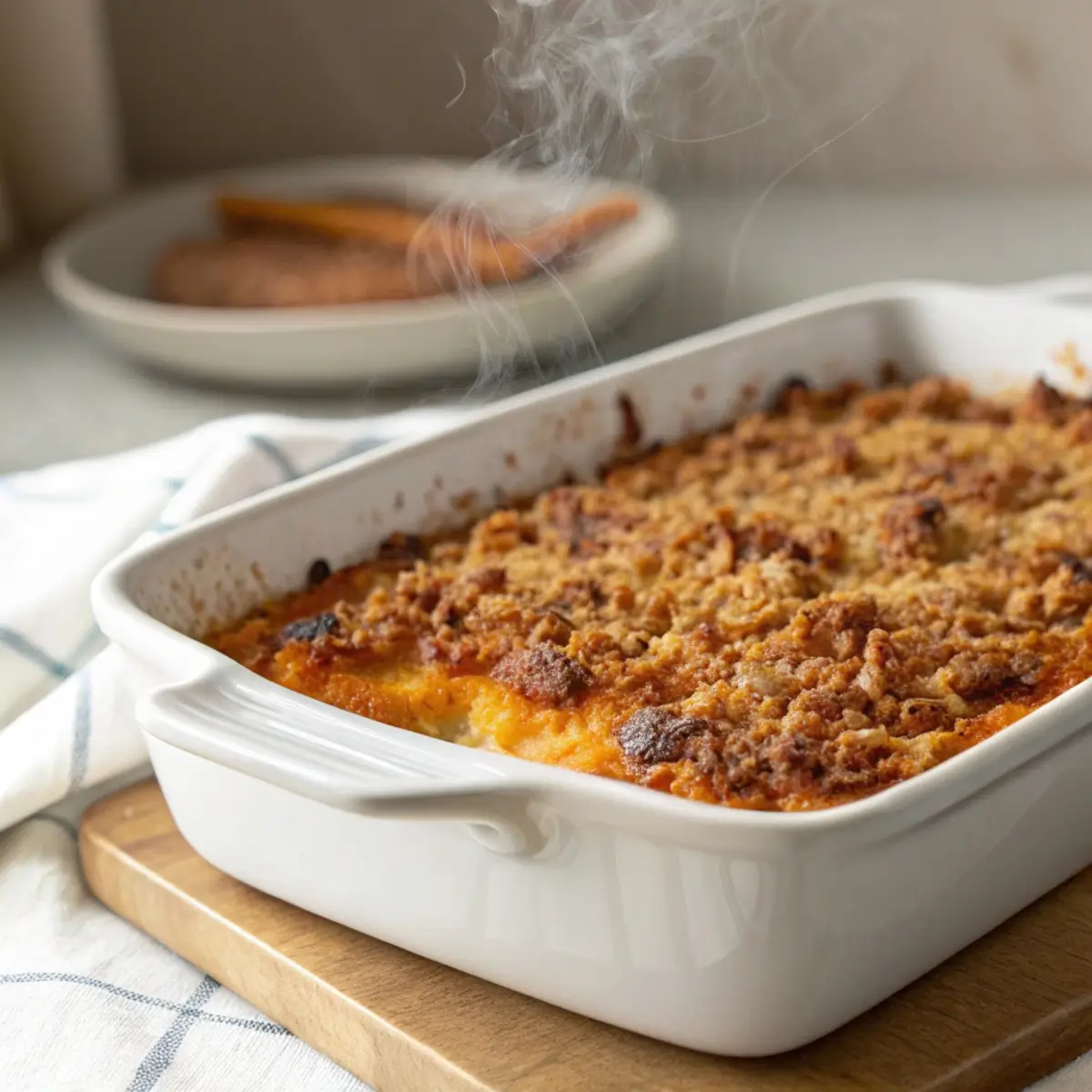
“A freshly baked sweet potato casserole being reheated in an oven-safe dish, with golden brown topping, soft light highlighting the textures and holiday table in the background.”
Alt Text for Featured Image:
“Sweet potato casserole in an oven-safe dish with golden brown topping being reheated, ready to serve for Thanksgiving or Christmas.”
Final Thoughts
Proper storage and reheating make your sweet potato casserole just as delicious as the day it was baked. By following these tips, you can enjoy every bite — creamy, flavorful, and topped with that irresistible golden crust — even days after your holiday meal.
Whether you’re preparing for a crowd, meal-prepping for the week, or saving leftovers for later, this guide ensures your sweet potato casserole stays fresh, delicious, and worry-free. Enjoy the convenience without compromising taste!