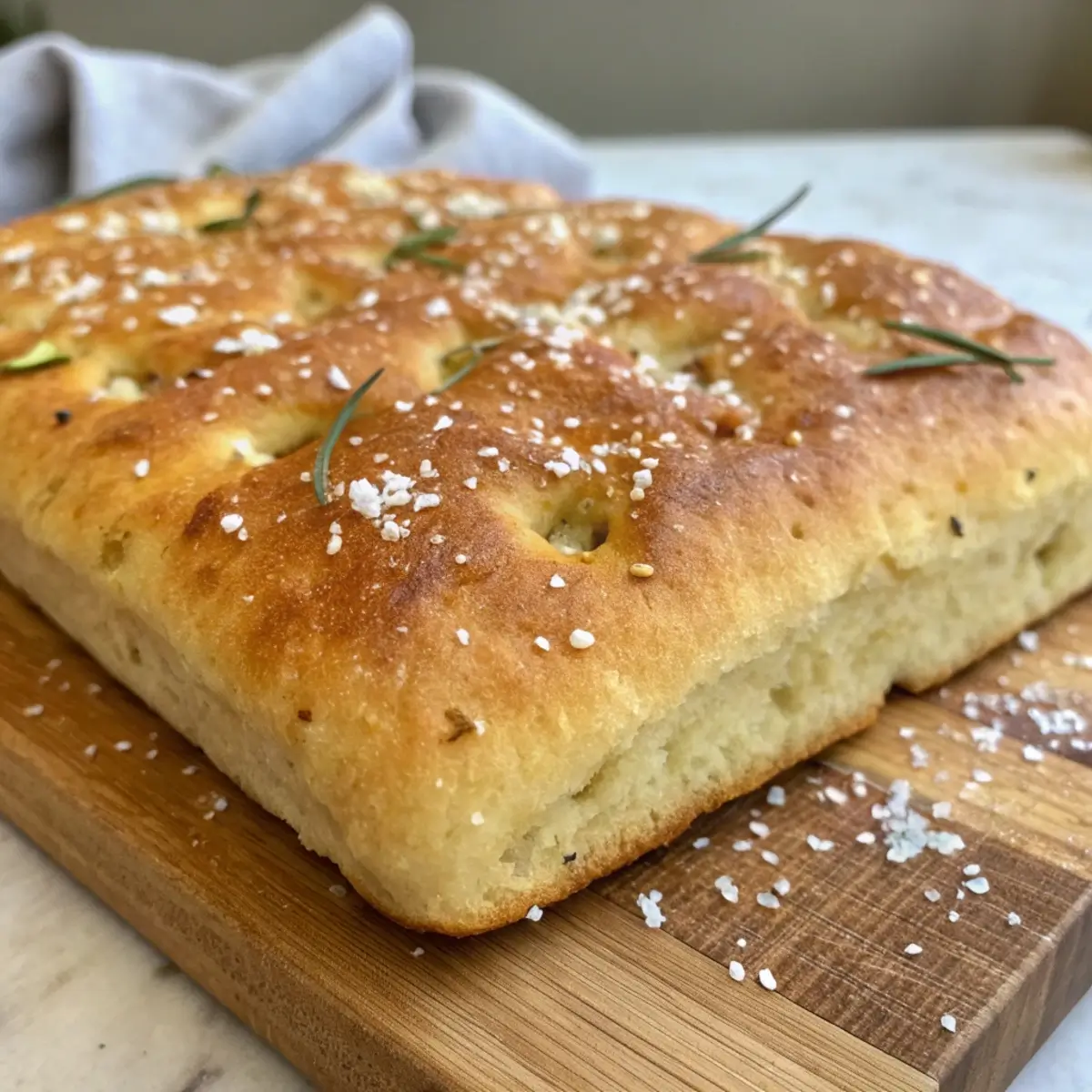
Sometimes, the most elegant recipes are the simplest ones. Sourdough Focaccia with Flaky Sea Salt Finish celebrates just that — the perfect union of naturally fermented dough, pure olive oil, and delicate sea salt.
This minimalist approach to focaccia lets every ingredient shine. The tangy complexity of sourdough pairs beautifully with the mineral crunch of sea salt and the richness of olive oil. The result is a bread that’s soft, airy, and golden on the bottom with a whisper of crispness on top — a classic that never fails to impress.
Whether you’re serving it alongside soups, salads, or dips, or simply tearing off a piece to enjoy warm from the oven, this focaccia delivers bakery-level results with very little effort.
This recipe is written for home bakers who love flavor-forward simplicity. No complicated toppings — just honest ingredients treated with care.
Why Choose a Flaky Sea Salt Finish
Flaky sea salt isn’t just a garnish — it transforms the eating experience.
Here’s why it’s essential in this recipe:
-
Texture: Large, delicate crystals add a satisfying crunch that contrasts with the soft crumb.
-
Flavor: Sea salt enhances the natural flavors of olive oil and sourdough without overpowering them.
-
Aesthetic: The salt glitters on the golden crust, giving a bakery-fresh, artisanal look.
When combined with the mild acidity of sourdough and rich olive oil, it creates a balanced, harmonious bite that feels both rustic and refined.
Ingredients for Sourdough Focaccia with Flaky Sea Salt
Dough
-
500 g bread flour (or strong all-purpose flour, 11–13% protein)
-
400 g water (80% hydration)
-
100 g active sourdough starter (100% hydration)
-
10 g fine sea salt
-
25 g extra virgin olive oil
For Topping
-
2–3 tablespoons extra virgin olive oil (for the pan and top)
-
1½ teaspoons flaky sea salt (Maldon or similar)
Recommended Equipment
-
Mixing bowl
-
Dough scraper
-
Kitchen scale
-
9×13 inch metal pan or cast iron skillet
-
Clean towel or reusable cover
-
Wire cooling rack
The Importance of Quality Ingredients
When a recipe uses only a few ingredients, quality makes all the difference.
-
Flour: Choose unbleached bread flour for structure and protein content.
-
Olive oil: A cold-pressed, fruity olive oil adds depth and aroma.
-
Sea salt: Look for flaky or pyramid-shaped crystals for texture and visual appeal.
Good ingredients mean your focaccia will taste incredible without extra toppings.
Step-by-Step Method
This step-by-step method is designed for consistency and clarity, ensuring even first-time bakers can achieve a golden, open-crumbed focaccia.
Step 1: Mix the Dough
In a large bowl, whisk together the active sourdough starter and water until milky.
Add the flour and mix by hand or dough whisk until no dry patches remain. The dough will be sticky and rough — that’s normal.
Cover and rest for 45 minutes (autolyse). This rest allows gluten to start developing naturally.
Step 2: Add Salt and Olive Oil
After resting, add the fine sea salt and olive oil. Use wet hands to pinch and fold the dough, incorporating both until smooth.
The dough will tighten as it absorbs the oil and salt — a sign of gluten development.
Step 3: Bulk Fermentation
Cover and let the dough ferment at room temperature (75°F / 24°C) for 4–6 hours, or until doubled in volume, soft, and bubbly.
During the first 2 hours, perform 3 sets of stretch and folds every 30 minutes.
To stretch and fold:
-
Wet your hands.
-
Grab one edge of the dough, lift gently, and fold it over the center.
-
Rotate the bowl and repeat 3–4 times.
After the last fold, leave the dough untouched until fully risen.
Step 4: Cold Fermentation (Optional but Recommended)
For deeper flavor and a lighter texture, refrigerate the dough for 12–18 hours after bulk fermentation.
Cold dough is easier to handle, less sticky, and develops that signature sourdough complexity.
Step 5: Prepare the Pan
Generously coat your baking pan with olive oil — about 2 tablespoons. Brush along the sides as well to prevent sticking and promote golden edges.
Gently transfer your dough into the pan. Drizzle another tablespoon of olive oil on top.
Using your fingertips, stretch the dough toward the corners. If it resists, let it rest for 10–15 minutes, then stretch again.
Step 6: Final Proof
Cover and let the dough proof at room temperature for 2–4 hours, or until puffy, jiggly, and airy.
The surface should show small bubbles under the skin — that’s your sign it’s ready.
Step 7: Dimple and Salt
Preheat your oven to 450°F (230°C).
Drizzle olive oil generously over the top of the dough. With oiled fingertips, press deep dimples all over the surface, pushing air pockets gently into the dough.
Sprinkle flaky sea salt evenly across the top — not too much, just enough to create a light, glistening finish.
Tip: Add the salt right before baking to prevent it from dissolving into the dough.
Step 8: Bake
Bake the focaccia for 25–30 minutes, or until the crust turns deep golden brown with crisp edges.
If you prefer extra color, bake an additional 3–5 minutes — just watch carefully.
Step 9: Cool and Serve
Allow the focaccia to rest in the pan for 5 minutes, then transfer to a wire rack.
Cool for at least 15 minutes before slicing — this helps the crumb set and preserves its airy texture.
Serve warm or at room temperature.
The Magic of Sea Salt + Olive Oil
When hot focaccia emerges from the oven, the olive oil glistens while the salt crystals cling to the golden top, adding contrast in both flavor and texture.
The first bite delivers a crunch of salt followed by the pillowy softness of sourdough — a simple yet luxurious combination that never goes out of style.
It’s proof that great bread doesn’t need much — just a few quality ingredients treated with care.
Serving Ideas
This minimalist focaccia pairs beautifully with almost anything:
-
Soups: Especially tomato, lentil, or vegetable soups.
-
Salads: Tear and toss alongside green or grain salads.
-
Dips: Serve with hummus, baba ganoush, or olive tapenade.
-
Sandwiches: Slice horizontally for a soft, flavorful base.
-
Appetizer boards: Combine with olives, cheeses, and roasted vegetables.
Or enjoy it on its own — warm, with a drizzle of olive oil and nothing more.
Texture and Flavor Guide
-
Crust: Crisp and golden from the olive oil.
-
Interior: Light, open, and springy with visible air pockets.
-
Flavor: Balanced tang from the sourdough, enhanced by the pure flavor of olive oil and the mineral crunch of salt.
Every element works together to create an unforgettable yet understated loaf.
How to Store Your Focaccia
-
At room temperature: Store in an airtight container for up to 2 days.
-
In the fridge: Keeps fresh for up to 5 days.
-
In the freezer: Slice and freeze for up to 1 month.
To reheat:
Place slices in a 350°F (175°C) oven for 5–8 minutes to restore crispness. Avoid microwaving — it softens the crust.
Troubleshooting Tips
Why is my focaccia dense?
Your dough may not have fermented long enough. Make sure it’s doubled and airy before baking.
Why didn’t it brown evenly?
Check your oven temperature and ensure the dough is well-coated with olive oil before baking.
Why is my crust too hard?
Overbaking or too little oil can cause dryness. Brush lightly with olive oil after baking if needed.
Why did my salt dissolve?
If added too early, moisture will dissolve the flakes. Always sprinkle flaky salt just before baking.
Key Tips for a Perfect Sea Salt Finish
-
Use the right salt: Choose a flaky, pyramid-shaped salt like Maldon or Fleur de Sel for both crunch and visual beauty.
-
Don’t over-salt: You want bursts of flavor, not overwhelming salinity.
-
Oil first, salt last: Oil acts as a base that helps salt stick and creates that glistening effect.
-
Bake hot: The quick, high-heat bake ensures crispness while locking in the salt texture.
Simple Flavor Variations
Once you master the minimalist version, experiment with subtle additions:
-
Lemon zest and thyme focaccia: Add zest to the dough for brightness.
-
Garlic-infused olive oil: Brush the dough with garlic oil before baking for aroma.
-
Sesame seed finish: Combine sea salt with sesame for nutty texture.
-
Herbed sea salt focaccia: Mix chopped herbs into your salt before sprinkling.
Each variation builds on the same elegant foundation — salt, oil, and fermentation.
Why This Recipe Works
This recipe succeeds because it relies on the natural strengths of sourdough:
-
Fermentation flavor: The sourdough starter adds gentle acidity and complexity.
-
Hydration balance: High water content keeps the crumb soft and open.
-
Olive oil magic: It caramelizes the crust, giving a deep golden color and crisp edges.
-
Sea salt finish: Enhances everything without competing for attention.
Every bite feels simple yet layered — proof that restraint can lead to the most rewarding results.
Nutrition Benefits
Sourdough focaccia, even in its simplicity, offers meaningful benefits:
-
Naturally leavened for easier digestion
-
Lower gluten content due to fermentation
-
Rich in healthy fats from olive oil
-
Moderated sodium since most salt stays on the surface
It’s a wholesome, balanced bread that feels indulgent but remains gentle on the system.
Frequently Asked Questions
Can I use all-purpose flour instead of bread flour?
Yes! The crumb will be slightly softer, but still light and flavorful.
Can I skip the cold fermentation?
Yes, but overnight refrigeration enhances both taste and texture.
How do I know when my focaccia is fully proofed?
It should look airy, wobble slightly when moved, and show bubbles beneath the surface.
What kind of sea salt works best?
Flaky finishing salts — not fine salt — create the right contrast in texture.
Can I use whole wheat flour?
Yes, replace up to 25% of the bread flour with whole wheat for added depth.
Can I make this gluten-free?
You can use a gluten-free bread flour mix, but structure and texture may vary.
Texture Timeline
-
After mixing: Sticky and shaggy.
-
After folds: Smoother and more elastic.
-
After bulk fermentation: Puffy and bubbly.
-
After proofing: Airy and jiggly.
-
After baking: Golden crust with visible salt crystals and open crumb.
When to Serve This Focaccia
This versatile bread fits almost any occasion:
-
As a starter with olive oil dips
-
As a side for soups or roasted vegetables
-
As an appetizer for gatherings
-
As an everyday bread for sandwiches or snacks
Its simplicity allows it to complement rather than compete with your meal.
Final Thoughts
Sourdough Focaccia with Flaky Sea Salt Finish proves that true beauty lies in simplicity. With only a handful of ingredients — flour, water, salt, starter, and olive oil — you create something golden, fragrant, and deeply satisfying.
Each element plays its part: the sourdough builds character, the olive oil creates richness, and the flaky sea salt adds sparkle and bite. Together, they form a timeless bread that’s both rustic and refined.
It’s a recipe that rewards patience, celebrates restraint, and reminds us that sometimes, the simplest breads are the most memorable.
So, the next time you’re in the kitchen, reach for your starter, your favorite olive oil, and a pinch of sea salt — and bake something truly beautiful.