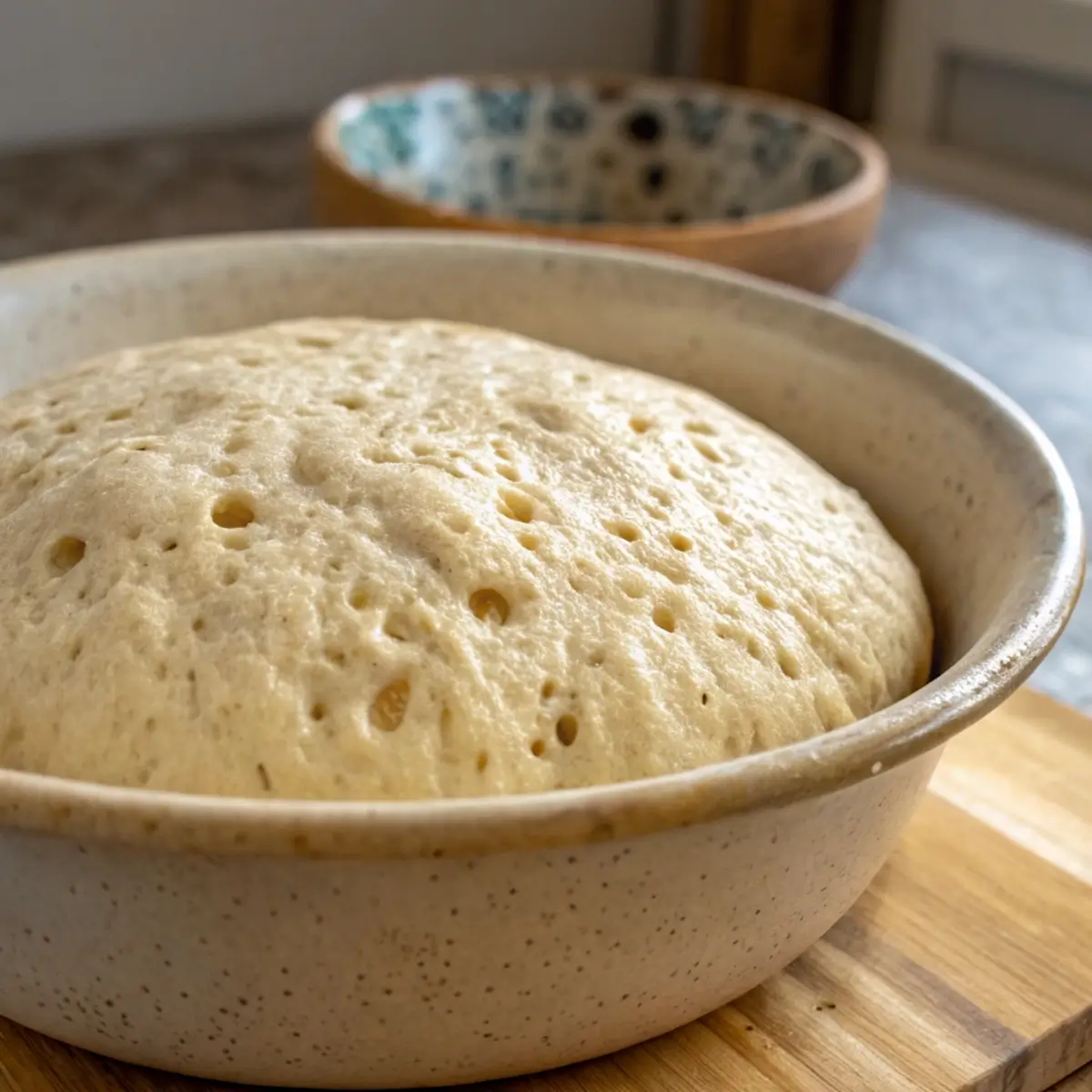
The bulk fermentation stage is the heartbeat of every great sourdough focaccia. It’s the silent, slow magic that transforms a simple mix of flour, water, starter, and salt into a living, aerated dough full of flavor and potential.
Getting this stage right is what separates a dense, flat focaccia from a beautifully soft, puffy, and open-crumbed one. Yet, for many bakers — especially beginners — bulk fermentation feels like a guessing game.
How long should it take?
What if my kitchen is cold or too warm?
How do I know when it’s done?
This complete Sourdough Focaccia Bulk Ferment Timing Guide breaks everything down: the science behind bulk rise, how to adjust for temperature, starter strength, flour type, and schedule, plus an easy-to-use temperature chart to help you time your dough perfectly.
Whether you bake in a chilly kitchen or a warm tropical climate, this guide gives you confidence to read your dough — not just the clock.
What Is Bulk Fermentation?
Bulk fermentation is the first long rise after mixing your dough and before shaping. It’s when your sourdough culture begins converting starches into acids, alcohols, and gases (carbon dioxide).
In this stage, three crucial things happen simultaneously:
-
Gluten development: Dough structure strengthens naturally.
-
Gas retention: Tiny air pockets form and expand, giving focaccia its light, airy texture.
-
Flavor building: Lactic acid bacteria in your starter create depth, tang, and complexity.
In simple terms: this is when your dough comes alive.
For focaccia, bulk fermentation is especially important because the dough’s final texture — soft, airy, and bubbly — depends almost entirely on how well this rise is managed.
Typical Bulk Ferment Time for Sourdough Focaccia
At average room temperature (around 75°F / 24°C), bulk fermentation usually takes 4 to 6 hours.
But this number is flexible. The exact duration depends on:
-
Temperature of your kitchen
-
Strength and maturity of your starter
-
Flour protein content
-
Hydration level
-
Amount of dough
-
Desired flavor profile
Focaccia doughs are typically wetter (75–85% hydration), so they ferment slightly faster than stiff doughs. However, they’re also more temperature-sensitive — a few degrees can change your timeline dramatically.
Understanding the Variables That Affect Bulk Ferment
Temperature
The warmer your environment, the faster the dough ferments.
Every 3–4°F (about 2°C) change in temperature can shift the fermentation time by nearly an hour.
-
Warm kitchens (78–82°F / 26–28°C): Expect faster fermentation — around 3–4 hours.
-
Cool kitchens (68–72°F / 20–22°C): Fermentation slows — around 6–8 hours.
-
Cold environments (below 65°F / 18°C): You may need up to 10–12 hours or an overnight ferment.
Starter Strength
A healthy, active starter doubles within 4–6 hours after feeding. If yours takes longer, your dough will too.
Tip: Always use your starter at peak activity — when it’s risen and just beginning to dome at the top.
Flour Type
Stronger flours (higher protein content) can hold gas longer, allowing longer fermentation times without collapse.
Weaker flours ferment faster but risk breaking down if left too long.
Hydration
The higher the water content, the faster fermentation tends to proceed. Water acts as a medium for enzymatic activity, accelerating yeast and bacterial action.
Salt and Oil
Both salt and olive oil slow fermentation slightly, giving better flavor control and a more predictable rise.
Bulk Fermentation by Temperature Chart
| Temperature | Approx. Duration | Description of Dough at End of Bulk |
|---|---|---|
| 60°F (16°C) | 10–12 hours | Slow rise, subtle tang, small bubbles |
| 65°F (18°C) | 8–10 hours | Steady rise, moderate flavor |
| 70°F (21°C) | 6–8 hours | Balanced fermentation, open crumb |
| 75°F (24°C) | 4–6 hours | Ideal range for most home bakers |
| 80°F (27°C) | 3–4 hours | Faster fermentation, more acidity |
| 85°F (29°C) | 2–3 hours | Rapid rise, must watch closely |
Use this chart as a baseline. Then, adjust based on how your dough looks and feels — your eyes and hands are your best tools.
How to Know When Bulk Fermentation Is Complete
Forget the clock — focus on the dough’s visual and tactile cues.
Here’s how you know it’s ready:
1. Volume Increase
The dough should rise by 50–100% — not necessarily double, but noticeably puffy and expanded.
2. Texture
The dough should feel soft, jiggly, and elastic. When you lift it, it should stretch without tearing.
3. Surface
Look for tiny bubbles just beneath the surface and a slightly domed shape in the bowl.
4. Aroma
A pleasant, mildly tangy, sweet smell means fermentation is balanced. A sharp, sour smell suggests it’s gone too far.
5. The “Finger Test”
Gently press a floured fingertip into the dough:
-
If the indentation slowly springs back halfway — it’s perfect.
-
If it bounces back completely — still needs time.
-
If it stays sunken — it’s slightly over-proofed.
The Dangers of Under- and Over-Fermentation
Under-Fermented Dough
-
Feels tight or dense
-
Doesn’t rise much
-
Results in a flat, chewy focaccia
-
Lacks flavor complexity
Over-Fermented Dough
-
Feels weak and sticky
-
Collapses easily when handled
-
Produces overly sour flavor
-
Creates large, uneven holes and a gummy texture
Finding that sweet spot takes observation, not perfection. The more you bake, the more intuitive it becomes.
How to Adjust Bulk Fermentation to Fit Your Schedule
Life doesn’t always align with your dough’s perfect timing — but sourdough is flexible.
Here are several scheduling options to help you make focaccia fit your day:
Option 1: Same-Day Bake (Warm Kitchen)
-
Mix in the morning
-
Bulk ferment for 4–6 hours
-
Shape and bake in the afternoon
Option 2: Overnight Cold Ferment
-
Mix and bulk ferment for 3–4 hours at room temperature
-
Transfer to the refrigerator overnight (12–16 hours)
-
Shape and bake the next morning
This option builds deep flavor and fits most workday schedules.
Option 3: Split Bulk + Cold Retard
-
Begin bulk fermentation for 2 hours at room temperature
-
Place dough in the fridge for up to 24 hours
-
Continue fermentation the next day at room temperature until doubled
Cold fermentation slows yeast activity, giving you flexibility without sacrificing flavor.
The Role of Stretch and Folds During Bulk Fermentation
Performing stretch and folds during the early bulk phase strengthens gluten and redistributes yeast for even fermentation.
Here’s a simple schedule:
-
Perform 3 sets within the first 2 hours, spaced 30 minutes apart.
-
Each set: stretch one edge up and fold it over, rotating the bowl four times.
This technique creates structure without kneading — essential for open, airy focaccia crumb.
The Importance of Visual Markers
Marking your bowl (with tape or marker) at the dough’s starting level helps you visually track rise progress.
It’s especially useful if your kitchen is cool or you’re fermenting overnight.
Common Bulk Fermentation Mistakes
1. Relying Only on Time
Every starter and kitchen environment is different. Trust your dough’s appearance and feel, not just the clock.
2. Ignoring Temperature
If your dough feels sluggish, it’s likely too cold. Move it to a warmer spot — like inside the oven with the light on — to help it along.
3. Using a Weak Starter
An underfed or inactive starter won’t lift your dough properly. Always feed it 6–8 hours before mixing.
4. Over-Folding
Too many stretch and folds can degas the dough. Three or four sets are plenty.
5. Letting It Go Too Long
An over-fermented focaccia may deflate easily and bake up gummy. Always bake once the dough looks airy but still has strength.
Visual Reference: What Bulk Fermentation Looks Like
Imagine these three snapshots:
-
Beginning: Sticky, compact, little elasticity.
-
Midway: Softer, slightly expanded, first bubbles appearing.
-
Complete: Puffy, smooth, elastic, jiggly with visible gas pockets.
This progression is your best indicator that fermentation is on track.
Bulk Fermentation in Different Climates
Warm Climates
-
Use cooler water when mixing.
-
Consider reducing starter percentage (from 20% to 10%) to slow fermentation.
-
Bulk ferment for shorter times and monitor closely.
Cool Climates
-
Use slightly warmer water (up to 85°F / 29°C).
-
Increase starter amount slightly (20–25%).
-
Extend fermentation or use a proofing box if needed.
Consistency comes from understanding how your environment affects your dough.
Incorporating Cold Bulk Fermentation
Refrigerating your dough during bulk fermentation has several benefits:
-
Enhances flavor complexity
-
Simplifies scheduling
-
Improves dough strength
Simply let the dough rise 1–2 hours at room temperature, then refrigerate. It will continue fermenting slowly overnight.
When ready to shape, let it rest at room temperature for 1–2 hours before dimpling and topping.
Flavor Development During Bulk Fermentation
Longer bulk fermentation encourages the growth of lactic acid bacteria, producing milder, yogurt-like acidity.
Shorter, warmer fermentation favors acetic acid, giving a sharper tang.
For focaccia, aim for balance — moderate fermentation at mid-range temperature (74–76°F / 23–24°C) produces the softest crumb with mild, pleasant flavor.
Bulk Fermentation and Dough Strength
As the dough ferments, gluten strengthens naturally. You’ll notice it transform from rough to smooth, stretchy, and strong.
A well-fermented dough can stretch into a thin windowpane without tearing — a visual sign of strength and readiness.
After Bulk Fermentation: The Transition to Proofing
Once bulk fermentation is complete, gently transfer the dough into a well-oiled pan. Avoid punching it down — you want to preserve those beautiful air pockets.
This stage (the final proof) is shorter, usually 2–4 hours, and finishes shaping the crumb structure.
Think of bulk fermentation as the foundation, and final proofing as the fine-tuning.
Frequently Asked Questions
How long should bulk fermentation last for focaccia?
Typically 4–6 hours at 75°F (24°C), but always use visual cues rather than time alone.
What happens if I cut bulk fermentation short?
The focaccia will bake up dense, with small, tight crumb and minimal rise.
Can I refrigerate my dough during bulk fermentation?
Yes! It’s a great way to slow down fermentation and enhance flavor.
How do I fix over-proofed dough?
Gently degas and reform into the pan for a shorter second rise. The texture will differ but still taste great.
Why is my dough sticky at the end of bulk fermentation?
It may be slightly over-fermented or over-hydrated. Add a light dusting of flour and handle gently.
Can I use an instant-read thermometer to track dough temperature?
Yes — the ideal dough temperature for focaccia bulk fermentation is around 75–78°F (24–26°C).
Practical Tips for Perfect Bulk Fermentation
-
Use a clear container. It helps you see bubbles and volume increase.
-
Keep your starter strong. Feed it regularly for consistent results.
-
Track with photos or notes. Comparing batches helps refine timing.
-
Don’t fear longer rises. Flavor improves with patience, as long as structure holds.
-
Trust your senses. Look, feel, and smell guide you better than any timer.
Troubleshooting at a Glance
| Problem | Likely Cause | Solution |
|---|---|---|
| Dense crumb | Under-fermented | Extend bulk rise, ensure starter is active |
| Sour flavor | Over-fermented | Shorten bulk time or reduce starter percentage |
| Sticky dough | Overproofed or too warm | Shorten rise, chill dough briefly |
| Lack of bubbles | Weak starter or low temperature | Feed starter, increase warmth |
| Collapsing dough | Over-fermented | Shorten fermentation next time |
The Perfect Bulk Ferment Is a Balance
Think of bulk fermentation as a living process — it’s both science and intuition. The yeast and bacteria respond to your environment, timing, and care.
A well-timed bulk ferment gives you everything you want in sourdough focaccia: a billowy, soft crumb, light tang, and golden crust that shatters delicately when torn.
When you learn to read your dough’s signs instead of chasing strict numbers, you unlock the true joy of sourdough baking.
Final Thoughts
Perfect sourdough focaccia isn’t about speed or complexity — it’s about observation, patience, and rhythm. Bulk fermentation is your moment to connect with the dough, understanding how temperature, time, and texture interact.
Once you grasp this stage, you’ll never again feel unsure about when your focaccia is ready. Each bake will become more consistent, flavorful, and rewarding.
So next time you’re watching your dough rise, remember — the magic is happening right before your eyes. You’re not just baking bread; you’re nurturing life, time, and transformation in a bowl.