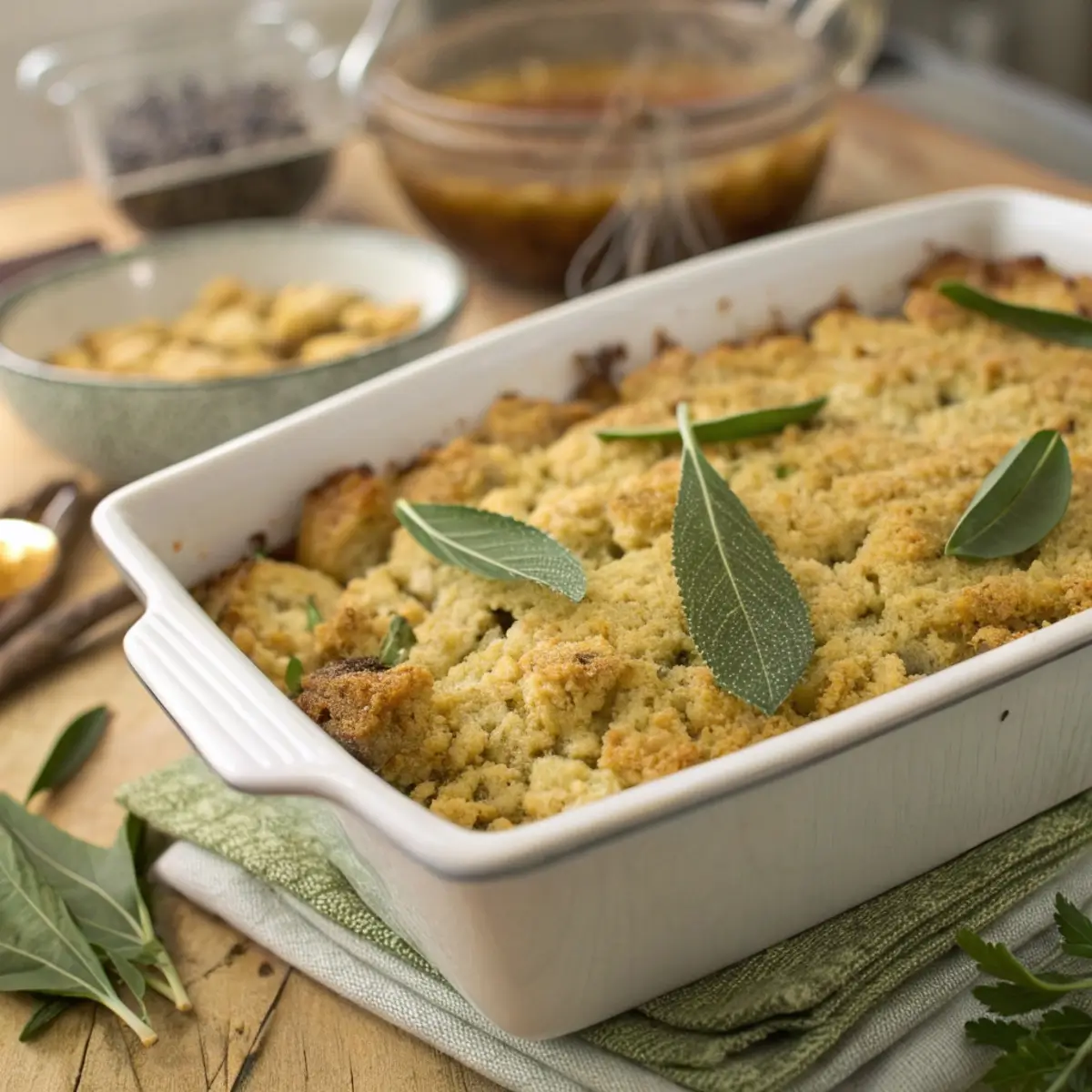
Nothing says “holiday comfort” quite like a warm, golden dish of Cornbread Dressing with Sage. Soft in the center, crisp around the edges, and packed with the comforting aroma of herbs, this traditional Southern side dish is the heart of many Christmas and Thanksgiving tables.
Unlike stuffing, which is typically cooked inside a turkey, cornbread dressing is baked in its own dish — giving it that irresistible contrast of fluffy interior and golden crust. And when it’s flavored with fresh sage, onion, and celery, it becomes the ultimate blend of cozy, savory goodness that feels like home.
This recipe takes classic Southern roots and adds just the right modern touches to make it perfect for today’s holiday gatherings. Whether you serve it alongside roasted turkey, baked chicken, or glazed ham alternatives, this dish holds its own as a Christmas table favorite.
Why You’ll Love This Cornbread Dressing Recipe
-
Classic Southern flavor: Earthy sage, buttery cornbread, and savory aromatics come together beautifully.
-
Perfect texture balance: Moist and tender inside, golden crisp edges on top.
-
No canned shortcuts: Fresh herbs and simple ingredients create an authentic, homemade taste.
-
Make-ahead friendly: Assemble ahead of time and bake on Christmas Day.
-
Crowd-pleasing comfort food: The kind of side everyone reaches for seconds of.
Ingredients
For the Cornbread Base
-
4 cups crumbled cornbread (homemade or high-quality boxed, cooled completely)
-
4 cups cubed day-old bread (French or country-style bread works best)
-
1 tablespoon olive oil or butter (for greasing the pan)
For the Dressing Mixture
-
1 stick (½ cup) unsalted butter
-
1 large onion, finely chopped
-
2 celery stalks, finely chopped
-
2–3 cloves garlic, minced
-
2 teaspoons fresh sage, finely chopped (or 1 teaspoon dried)
-
1 teaspoon fresh thyme, chopped
-
1 teaspoon salt (adjust to taste)
-
½ teaspoon black pepper
-
2 ½ cups low-sodium chicken or vegetable broth
-
2 large eggs, lightly beaten
-
½ cup milk or half-and-half (for creaminess)
Optional Add-Ins (to personalize it)
-
½ cup chopped fresh parsley – for freshness
-
1 cup sautéed mushrooms – for depth of flavor
-
½ cup chopped pecans – for crunch
-
½ cup golden raisins or dried cranberries – for a sweet contrast
Equipment Needed
-
Large skillet
-
Mixing bowls
-
Whisk and wooden spoon
-
9×13-inch baking dish
-
Oven mitts
-
Aluminum foil (for covering during part of the bake)
Step-by-Step Instructions
Step 1: Prepare the Cornbread Base
If you haven’t already, bake your cornbread the day before (or several hours ahead) so it can dry out slightly. This helps it absorb more flavor without turning mushy.
Break or cut the cornbread into small chunks. Add the cubed day-old bread to a large bowl and toss them together.
Tip: You can spread the bread cubes on a baking sheet and dry them out in a 300°F oven for 10–12 minutes if you’re short on time.
Step 2: Sauté the Vegetables
In a large skillet, melt butter over medium heat. Add onion and celery, cooking until soft and translucent (about 5–7 minutes).
Stir in garlic, sage, thyme, salt, and pepper. Cook another minute until fragrant.
Remove from heat and let the mixture cool slightly.
The scent of sage and butter sautéing is pure holiday magic — it sets the stage for this comforting dish.
Step 3: Combine the Ingredients
In your large bowl of cornbread and bread cubes, pour in the sautéed vegetable mixture.
Whisk together broth, milk, and eggs, then pour over the bread mixture. Gently stir to combine until everything is evenly moistened but not soggy.
Let the mixture rest for 10 minutes so the bread can absorb the liquid.
It should look slightly wet but still hold together when pressed.
Step 4: Transfer to the Baking Dish
Grease your baking dish with olive oil or butter. Pour the dressing mixture in and spread it evenly.
If you like a softer dressing, cover the top with foil for the first part of baking. For a crisper texture, leave it uncovered the whole time.
Step 5: Bake to Golden Perfection
Bake in a preheated 375°F (190°C) oven for 35–45 minutes, until the top is golden brown and crisp around the edges.
If the top starts browning too quickly, tent it loosely with foil.
When finished, it should be set in the center but still moist when cut.
Step 6: Cool Slightly and Serve
Remove from the oven and let rest for 10 minutes before serving. Garnish with fresh sage or parsley for a beautiful holiday presentation.
Serve warm as a side to your favorite Christmas or Thanksgiving main dish.
Flavor and Texture Notes
This cornbread dressing with sage has a flavor profile that’s earthy, buttery, and deeply comforting.
-
The cornbread adds sweetness and crumbly richness.
-
The sage and thyme bring warm, aromatic depth.
-
The broth and milk create a soft, custard-like texture.
-
The crisp top adds contrast to the tender interior.
It’s the perfect dish for people who love traditional holiday flavors with a homemade, Southern touch.
Make-Ahead and Storage Tips
Make Ahead:
-
Assemble the dressing up to 24 hours in advance, cover tightly, and refrigerate.
-
When ready to bake, let it come to room temperature (about 30 minutes), then bake as directed.
Reheating:
-
Reheat in the oven at 350°F (175°C) for 15–20 minutes. Add a splash of broth before reheating to keep it moist.
Storage:
-
Store leftovers covered in the refrigerator for up to 4 days.
-
Freeze in airtight containers for up to 2 months. Thaw overnight and reheat in the oven.
Expert Tips for Perfect Cornbread Dressing
-
Use day-old bread: Fresh bread turns mushy; slightly dry bread gives structure.
-
Don’t skip the sage: It’s the defining flavor of this recipe — earthy, herbal, and deeply Southern.
-
Taste before baking: Adjust seasoning before the eggs set.
-
Control the moisture: Dressing should be moist but not soupy before baking.
-
Let it rest: A short resting time after baking helps it set for clean slices.
Recipe Variations
Buttery Herb Cornbread Dressing
Add a mix of rosemary, thyme, and sage for a more herbaceous flavor.
Vegetarian Version
Use vegetable broth instead of chicken broth for a fully vegetarian holiday dish.
Pecan-Sage Dressing
Fold in ½ cup chopped toasted pecans before baking for a buttery crunch.
Cranberry-Sage Twist
Add ¼ cup dried cranberries for sweet pops of flavor that balance the savory notes.
Mushroom & Sage Cornbread Dressing
Sauté 8 ounces of mushrooms with the onion and celery for a hearty, umami boost.
How to Serve Cornbread Dressing
This dish is the ideal companion for nearly every holiday entrée. Pair it with:
-
Roasted turkey or chicken
-
Herb-crusted beef tenderloin
-
Honey-baked salmon or trout
-
Sweet potato casserole with pecan streusel
-
Brown butter green beans with almonds
For a true Southern-style holiday meal, add collard greens, mashed potatoes, and cranberry sauce.
Presentation Ideas
-
Serve the dressing in a ceramic or cast iron baking dish for rustic charm.
-
Garnish with a few sprigs of fresh sage or thyme before serving.
-
Add a drizzle of melted butter or olive oil just before bringing to the table for shine and aroma.
-
For buffet-style meals, portion into mini ramekins for individual servings.
A golden, bubbling pan of cornbread dressing is the definition of holiday comfort — humble ingredients transformed into something truly special.
Troubleshooting
Why is my dressing too dry?
You may not have added enough broth or the bread was too stale. Add a bit more warm broth and bake covered for 10 more minutes.
Why is it too wet?
Too much liquid or underbaking can make it soggy. Bake uncovered for another 10 minutes to firm up.
Can I make this without eggs?
Yes! Replace eggs with ¼ cup unsweetened applesauce or 3 tablespoons of melted butter for binding.
My dressing isn’t flavorful enough.
Salt, broth, and herbs are key. Taste the mixture before baking and adjust seasoning as needed.
Nutritional Information (Approximate per serving)
| Nutrient | Amount |
|---|---|
| Calories | 280 |
| Fat | 14g |
| Carbohydrates | 32g |
| Protein | 6g |
| Fiber | 3g |
| Sodium | 420mg |
FAQs
Is cornbread dressing the same as stuffing?
They’re similar, but dressing is baked in a dish, while stuffing is cooked inside poultry.
Can I use boxed cornbread mix?
Yes, just make sure to prepare it the day before so it dries out slightly.
Can I use fresh bread instead of day-old?
If using fresh, lightly toast it in the oven first to reduce moisture.
Can I make it dairy-free?
Use plant-based milk and vegan butter for an easy dairy-free version.
What type of broth works best?
Low-sodium chicken or vegetable broth allows you to control saltiness and keeps the dish moist.
Can I double the recipe?
Yes! Use a larger roasting pan and extend the baking time by 10–15 minutes if needed.
Why This Recipe Works
This Holiday Cornbread Dressing with Sage works because it respects tradition while emphasizing perfect technique. The combination of dry, crumbly cornbread and custardy egg-broth mixture gives it the ideal texture — neither mushy nor dry.
The fresh sage and thyme infuse every bite with holiday warmth, while the butter and broth tie it all together into a cohesive, flavorful side dish that feels like the season itself.
It’s a recipe that honors the past while fitting seamlessly into modern Christmas cooking.
What to Serve With Cornbread Dressing
Pair this festive dressing with:
-
Creamy Garlic Mashed Potatoes
-
Honey Butter Roasted Carrots
-
Maple Roasted Brussels Sprouts
-
Cheesy Scalloped Potatoes with Gruyere
-
Pull-Apart Cheesy Garlic Bread Wreath
Each pairing adds balance — creamy, sweet, and savory elements that make your Christmas dinner spread feel complete.
Final Thoughts
This Holiday Cornbread Dressing with Sage is more than just a side dish — it’s a tradition, a memory, and a symbol of togetherness. Every spoonful brings warmth, comfort, and nostalgia to your holiday table.
From its buttery texture to the gentle earthiness of sage, this dish captures everything we love about Christmas cooking: cozy, homemade flavors that make people linger around the table just a little longer.
Serve it warm, surrounded by laughter, lights, and your favorite people — and know that you’ve made a true holiday classic that will be requested year after year.