Why Prime Rib and Au Jus Belong Together
The Role of Au Jus
Au jus is a light beef sauce created from pan drippings. It’s thinner than gravy, not thickened with flour, and meant to enhance—not overwhelm—the prime rib. It keeps each slice moist, boosts the savory depth of the meat, and adds restaurant-level richness.
Why an Alcohol-Free Version Works Perfectly
Many au jus recipes depend on wine to add acidity or depth, but you can achieve the same effect without alcohol using:
-
High-quality beef broth
-
Aromatic vegetables
-
Fresh herbs
-
Natural fond from the roasting pan
-
A splash of lemon for brightness
This version is full of flavor, holiday-friendly, and suitable for every guest at the table.
Oven Roasting + Au Jus = The Perfect Pair
Roasting prime rib in the oven produces a consistent, evenly cooked result with minimal effort, while the au jus captures the concentrated flavors developed during roasting. The two create a harmonious, celebratory dish ideal for festive meals and family-style dining.
Choosing the Best Prime Rib for This Recipe
Bone-In or Boneless
Both work beautifully in this recipe:
Bone-In Prime Rib:
-
More insulation for even cooking
-
Exceptional flavor
-
Creates deeper drippings for au jus
Boneless Prime Rib:
-
Easier to slice
-
Cooks slightly faster
-
Ideal for smaller roasters or ovens
How Much to Buy
-
Bone-in: 1 pound per person
-
Boneless: ¾ pound per person
-
Add extra for big appetites or leftovers
Marbling Matters
Choose a roast with good marbling throughout the center. Fat equals flavor and tenderness.
Ingredients for Oven Prime Rib with Alcohol-Free Au Jus
For the Prime Rib
-
1 whole prime rib roast (bone-in or boneless)
-
Kosher salt
-
Black pepper
-
Garlic powder
-
Onion powder
-
Olive oil or softened butter
-
Optional herbs: dried rosemary, dried thyme, smoked paprika
For the Alcohol-Free Au Jus
-
Pan drippings from roast
-
2–3 cups beef broth
-
1 tablespoon olive oil or butter
-
1 small onion, chopped
-
1–2 garlic cloves, minced
-
1 teaspoon dried thyme or 1 sprig fresh
-
1 teaspoon dried rosemary or 1 sprig fresh
-
1–2 teaspoons lemon juice (optional)
-
Salt and pepper to taste
All ingredients follow your dietary rules—no alcohol or wine involved.
Preparing the Prime Rib for Roasting
Let the Roast Sit at Room Temperature
Place the roast on the counter for 1½–2 hours before cooking to ensure even roasting.
Dry the Surface Thoroughly
Moisture prevents browning, so pat the roast with paper towels until dry.
Season Generously
Coat the roast with oil or butter, then sprinkle salt, pepper, garlic powder, and onion powder on all sides. Add optional dried herbs or smoked paprika for color.
Use a Roasting Rack (or Improvised Version)
Bone-in roasts can sit on their ribs.
Boneless roasts should be placed on a rack or on top of vegetables like carrots or onions to promote airflow.
Oven Temperature Strategy: The Two-Stage Method
High-Heat Start
Preheat the oven to 500°F (260°C).
Roast the prime rib for 15 minutes.
This caramelizes the exterior and creates a dark, crispy crust.
Low-Heat Finish
Reduce oven temperature to 250°F (120°C).
Continue roasting until internal temperature reaches:
-
118–120°F for rare
-
122–125°F for medium-rare
-
130–133°F for medium
Cooking time typically ranges from 2–4 hours, depending on roast size.
Always Use a Thermometer
Your thermometer—not the clock—determines doneness.
Resting the Roast (A Critical Step)
Why Resting Matters
A prime rib that doesn’t rest will leak juices everywhere, resulting in dryness.
How Long to Rest
Let the roast sit for 25–45 minutes, tented loosely with foil.
During this period, the temperature rises 5–10 degrees, reaching its finished doneness.
Making Homemade Au Jus (No Alcohol, No Wine)
Step 1: Remove Roast and Collect Drippings
After transferring the roast to rest, place the roasting pan on the stovetop.
Step 2: Sauté Aromatics
Add the olive oil or butter.
Sauté onions until golden, then add garlic.
Step 3: Deglaze with Broth
Pour in 2–3 cups of beef broth to lift all the browned bits (fond).
These bits provide deep flavor normally associated with wine but entirely alcohol-free.
Step 4: Add Herbs
Add rosemary and thyme to enhance aroma.
Step 5: Simmer
Let the mixture simmer for 10–15 minutes until slightly reduced.
Step 6: Strain
Pour through a mesh strainer for a smooth, clean au jus.
Step 7: Add Lemon (Optional)
A teaspoon or two brightens the flavor without wine.
Step 8: Adjust Seasoning
Taste and season with salt and pepper.
Serving the Prime Rib with Au Jus
Carving Tips
-
For bone-in: slice bones off in one piece, then carve the roast.
-
For boneless: stabilize with tongs and slice evenly.
Always slice against the grain.
Presentation Tips
-
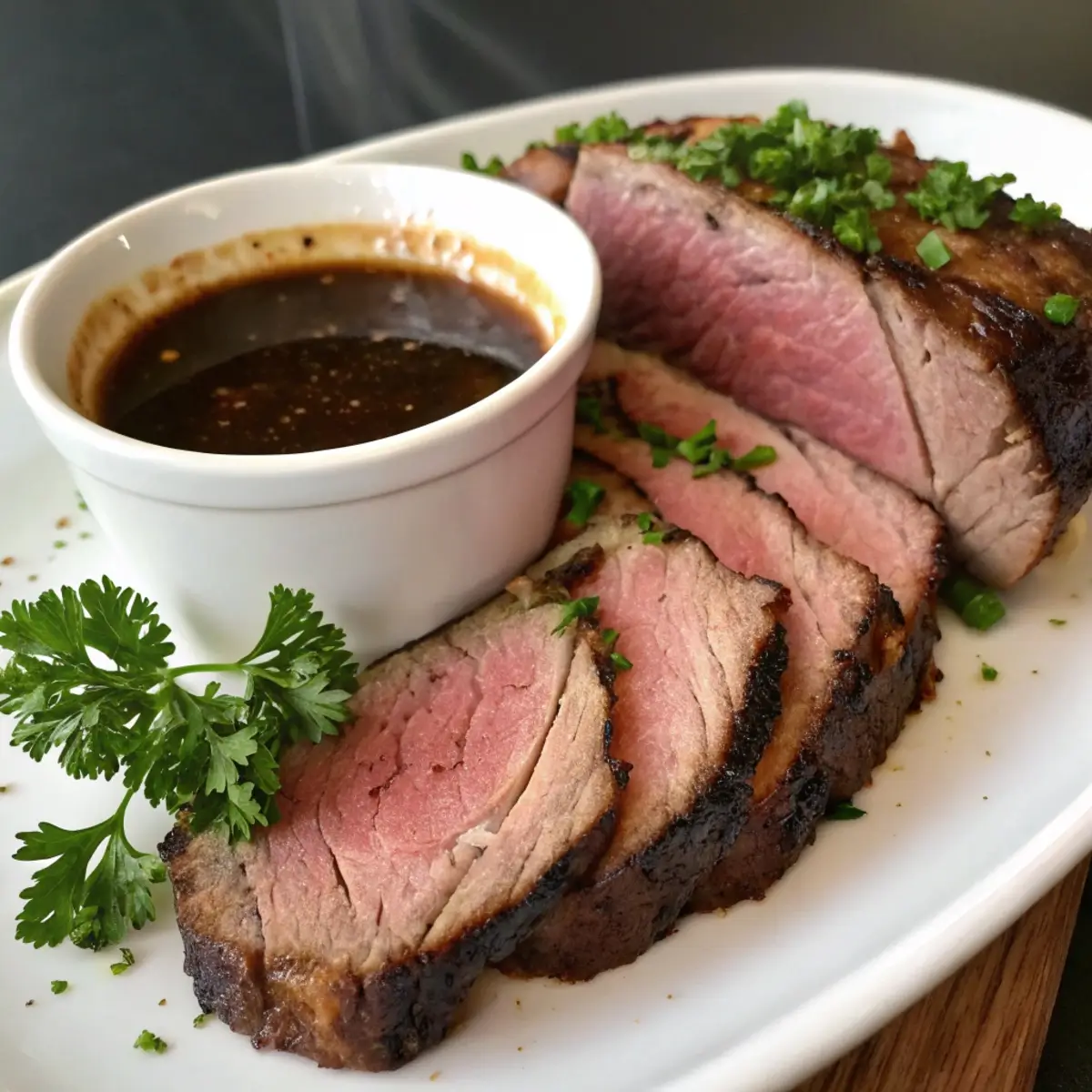
Serve slices fanned on a platter.
-
Place warm au jus in a small bowl or gravy boat.
-
Garnish with rosemary or thyme sprigs.
Side Dishes That Pair Beautifully with Prime Rib and Au Jus
Classic Pairings
-
Creamy mashed potatoes
-
Roasted garlic potatoes
-
Roasted carrots
-
Green beans with garlic
-
Yorkshire-style popovers (no alcohol needed)
Fresh and Bright Options
-
Mixed green salad
-
Lemon herb asparagus
-
Cucumber and dill salad
Sauces for Variety
-
Horseradish cream
-
Garlic herb butter
-
Mustard sauce (alcohol-free)
Tips for Success
Use Salt Liberally
Large roasts need strong seasoning to penetrate.
Don’t Skip the Rest
It’s crucial for moisture retention.
Keep the Au Jus Light
Au jus should be thin and pourable, not thick like gravy.
Monitor Oven Temperature
Ovens vary, so check with an oven thermometer.
Common Mistakes to Avoid
Overcooking
Check temperature earlier than expected, especially for smaller roasts.
Rushing the Resting Period
This causes dryness.
Using Low-Quality Broth
Good broth equals better au jus.
Scraping Too Hard When Deglazing
Be gentle to avoid bitterness.
Frequently Asked Questions
Can I make au jus without wine or alcohol?
Yes—this recipe is completely alcohol-free and still full of flavor.
How much broth should I use for au jus?
Usually 2–3 cups, depending on your reduction preference.
Should I skim the fat?
Skim excess fat for a cleaner sauce, but leave a small amount for richness.
Can I make the au jus ahead of time?
Yes. Prepare it up to 2 days ahead and warm gently before serving.
How do I thicken au jus?
Traditional au jus is thin, but you may simmer longer for a richer body.
What’s the best doneness for prime rib?
Most prefer medium-rare because it preserves tenderness and moisture.
Can I use fresh herbs instead of dried?
Absolutely—fresh herbs add extra fragrance.
How do I store leftover prime rib?
Refrigerate for up to 4 days or freeze for up to 2–3 months.
How do I reheat prime rib without drying it?
Warm slices in broth or at low oven heat (around 275°F).