Choosing the Perfect Prime Rib Roast
Bone-In vs Boneless
Bone-In:
-
Adds natural flavor and moisture.
-
Helps regulate heat for more even cooking.
-
Ideal for a dramatic presentation.
Boneless:
-
Easier to carve and slice.
-
Cooks slightly faster.
-
Perfect for smaller ovens or when you want uniform slices.
Size Guide for Christmas Dinner
-
Bone-In: ~1 pound per person.
-
Boneless: ~¾ pound per person.
-
Increase by ½ pound per person for leftovers or hearty appetites.
Quality Considerations
Look for:
-
Even marbling for tenderness.
-
A firm fat cap on top for moisture and flavor.
-
Bright, cherry-red meat for freshness.
Essential Equipment
-
Roasting pan with rack: Promotes even cooking and prevents the roast from sitting in its own fat.
-
Meat thermometer: Ensures perfect doneness without guesswork.
-
Carving knife and board: For neat, consistent slices.
-
Oven thermometer: Some ovens vary significantly; this ensures accuracy.
Ingredients for Easy Christmas Prime Rib
-
4–8 lb prime rib roast (bone-in or boneless)
-
2–3 tablespoons olive oil or softened butter
-
2–3 teaspoons kosher salt
-
1–2 teaspoons black pepper
-
1 teaspoon garlic powder
-
1 teaspoon onion powder
-
Optional herbs: rosemary, thyme, smoked paprika
These ingredients keep the roast simple but flavorful, emphasizing the natural richness of the beef.
Preparing the Roast
Bring to Room Temperature
Remove the roast from the fridge 1–2 hours before cooking. A cold roast will cook unevenly.
Dry the Surface
Pat with paper towels to remove excess moisture. This helps achieve a golden, crispy crust.
Seasoning
Rub the roast with olive oil or butter. Generously season with salt, pepper, garlic, and onion powder. Optional herbs or smoked paprika can be added for aroma and color.
Roasting Rack Setup
-
Bone-In: Roast naturally sits on the ribs.
-
Boneless: Use a rack or layer root vegetables underneath to allow heat circulation.
Oven Roasting Method
Step 1: High-Heat Start
-
Preheat the oven to 500°F (260°C).
-
Roast for 15 minutes to form a caramelized crust.
Step 2: Lower Heat for Even Cooking
-
Reduce oven to 250°F (120°C).
-
Roast until the internal temperature reaches:
-
Rare: 115–120°F
-
Medium-Rare: 122–125°F
-
Medium: 130–135°F
-
Cooking Time Estimates:
-
Bone-In: 20–25 minutes per pound (low and slow)
-
Boneless: 18–22 minutes per pound
Always check with a meat thermometer rather than relying solely on the clock.
Step 3: Rest the Roast
-
Remove the roast from the oven.
-
Tent loosely with foil.
-
Rest 25–45 minutes to allow juices to redistribute.
Internal Temperature Guide
-
Rare: 125°F finished
-
Medium-Rare: 130–135°F finished
-
Medium: 140–145°F finished
Tip: Temperature rises 5–10°F during resting due to carryover cooking.
Carving the Prime Rib
Bone-In Roast
-
Stand the roast on the ribs.
-
Slice meat away from the bones in one piece.
-
Cut into thick or thin slices depending on preference.
Boneless Roast
-
Stabilize the roast on the cutting board.
-
Slice evenly against the grain for maximum tenderness.
Optional Garlic-Herb Crust
For an added festive touch:
-
Mix 2 tablespoons softened butter with 2 minced garlic cloves and 1 teaspoon chopped rosemary.
-
Spread over the roast before high-heat sear.
-
This enhances both aroma and presentation.
Serving Suggestions
Classic Holiday Sides
-
Garlic mashed potatoes
-
Roasted carrots and parsnips
-
Green beans almondine
-
Creamed spinach
Sauces
-
Horseradish cream
-
Garlic herb butter
-
Beef au jus (alcohol-free)
Presentation Tips
-
Place slices on a warmed platter.
-
Fan slices slightly for visual appeal.
-
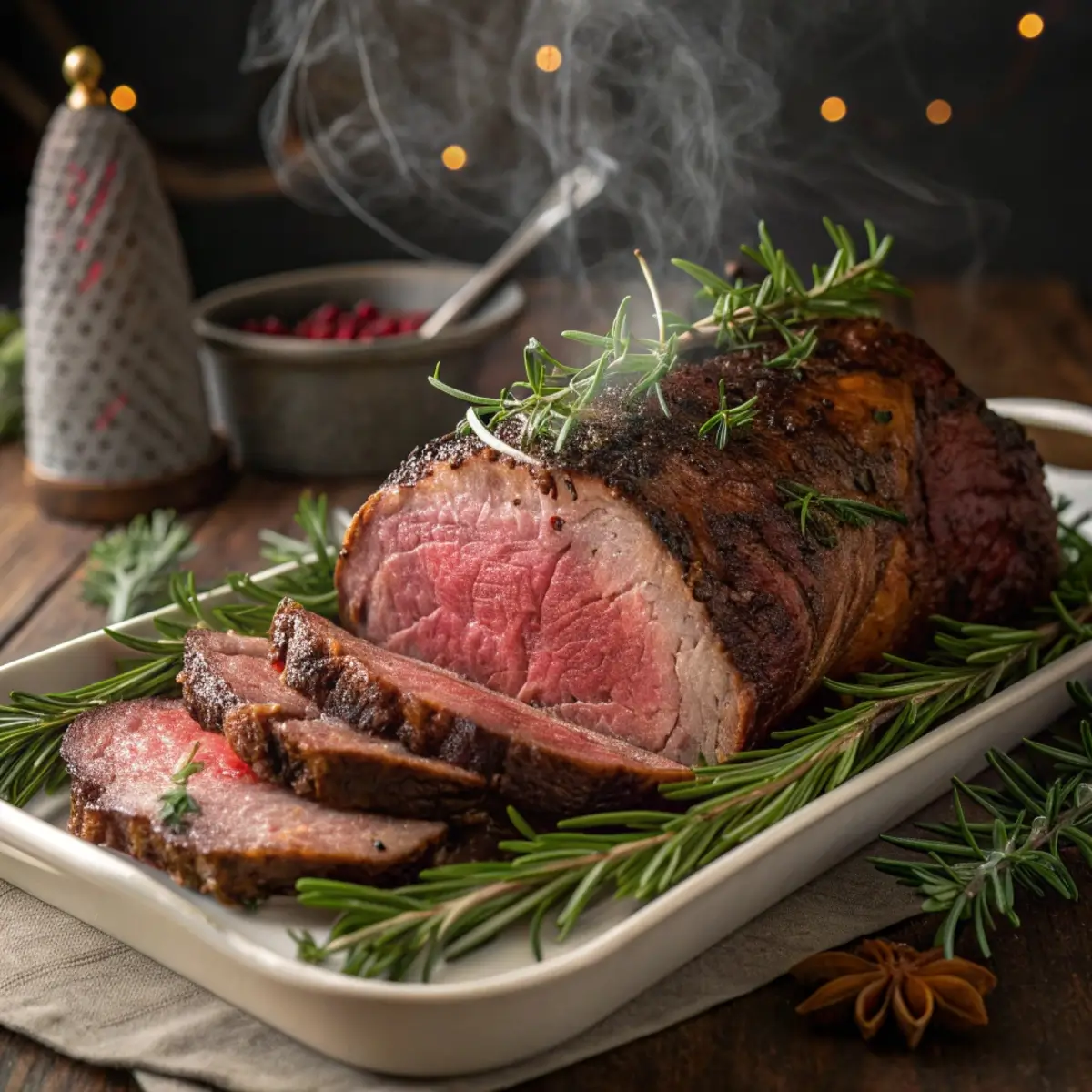
Garnish with fresh rosemary or thyme sprigs.
Make-Ahead Tips
-
Season the roast the night before and refrigerate uncovered for a dry surface, which improves crust formation.
-
Roast vegetables in advance and reheat alongside the meat.
-
Prepare any sauces or accompaniments a day ahead to reduce holiday stress.
Common Mistakes to Avoid
-
Skipping the rest: The roast loses juices and becomes dry.
-
Overcrowding the oven: Airflow is essential for even cooking.
-
Under-seasoning: Large roasts need generous salt to bring out flavor.
-
Skipping thermometer checks: Oven times vary; internal temperature is the only accurate guide.
Frequently Asked Questions
How long does a prime rib take in the oven?
Depends on size and method. Generally, low and slow: 20–25 minutes per pound for bone-in, 18–22 for boneless.
Should I cover the roast while cooking?
No, roasting uncovered ensures a crust forms.
Can I cook this roast the night before?
You can cook and refrigerate, but gently reheat in a low oven to maintain juiciness.
What doneness is best for Christmas prime rib?
Medium-rare (130–135°F finished) is classic, preserving tenderness and moisture.
How do I make it easier to carve?
Let it rest at least 25 minutes, and use a long, sharp carving knife.
Can I freeze leftovers?
Yes, tightly wrapped in foil or vacuum-sealed for up to 3 months.
Tips for the Perfect Holiday Roast
-
Invest in a good meat thermometer; it ensures flawless doneness.
-
Use quality olive oil or butter for seasoning—it enhances browning.
-
Let your roast come to room temperature for even cooking.
-
Consider adding a garlic-herb rub for festive aroma.
-
Rest the roast before carving—it’s the key to juicy slices.
Optional Garnish and Decoration
-
Sprigs of fresh rosemary and thyme on the platter for holiday flair.
-
Sprinkle coarse salt lightly over the roast slices.
-
Arrange side vegetables around the roast for color and festive presentation.