Holiday meals revolve around one essential theme: bringing people together around memorable, comforting food. Whether you’re planning a Christmas dinner, a New Year’s celebration, or a winter gathering with friends, a perfectly cooked beef roast often becomes the star of the table. But despite its elegance, preparing a beef roast doesn’t have to be complicated or stressful. In fact, with the right oven timing method, it becomes one of the most predictable and rewarding dishes you can make.
This guide was created to eliminate the guesswork from roasting beef in the oven. Instead of worrying about doneness, timing, temperature, and resting periods, you’ll have a clear framework you can rely on—no matter which cut you choose. Whether you’re cooking a large roast for a holiday feast or preparing a smaller roast for a cozy family dinner, these tips help you achieve a tender, juicy, and flavorful result every time.
We’ll cover different types of beef roasts, ideal oven temperatures, step-by-step roasting guidelines, how to build your own timing chart, and how to adjust for size, doneness, and oven behavior. This guide is packed with expert-level detail explained simply, making it accessible to beginners and experienced cooks alike. You’ll also learn how to carve, serve, store, and reheat your roast, plus a comprehensive FAQ section to make your holiday cooking completely stress-free.
Why Use an Oven Cooking Times Guide for Holiday Roasts?
Roasting beef is both an art and a science. The science comes from understanding heat, timing, and carryover cooking. The art comes from seasoning, choosing side dishes, carving beautifully, and presenting a stunning centerpiece.
This oven timing guide helps you:
-
Plan ahead for big meals
-
Prevent overcooking
-
Achieve consistent doneness
-
Time other dishes around your roast
-
Understand how different sizes cook
-
Choose the right oven method for your cut
The holiday season is busy enough—you deserve a reliable guide that makes your main course nearly foolproof.
Choosing the Best Cut for a Holiday Beef Roast
Not all beef roasts cook the same way. Some are naturally tender, while others benefit from slow, extended cooking. Understanding the differences helps you select the right roast for your gathering.
Prime Rib (Standing Rib Roast)
-
Rich marbling
-
Very tender
-
Best cooked to medium-rare
-
Excellent for celebrations
Boneless Ribeye Roast
-
Same quality as prime rib without the bones
-
Easy to carve
-
Cooks slightly faster
Top Sirloin Roast
-
Leaner but very flavorful
-
Great for larger crowds
-
More budget-friendly
Beef Tenderloin Roast
-
Extremely tender
-
Mild flavor
-
Shorter cooking time
-
Perfect for elegant dinners
Chuck Roast (For Slow Roasting)
-
Best cooked low and slow
-
Juicy, richly flavored, fork-tender
This guide focuses primarily on oven methods that deliver tender, festive results across all these cuts—without using pork, bacon, or alcohol.
Understanding Oven Temperatures for Beef Roasting
Temperature control is the core of a successful roast. Different roasts benefit from different oven temperatures.
High-Heat Roasting
-
Oven: 425°F–475°F (218°C–246°C)
-
Creates a deeply browned crust
-
Best for: tender cuts (prime rib, ribeye, tenderloin)
-
Shorter roasting time
Slow Roasting
-
Oven: 225°F–275°F (107°C–135°C)
-
Produces ultra-tender, evenly cooked meat
-
Ideal for: larger roasts or thick cuts
-
Prevents grey outer bands
Moderate Roasting
-
Oven: 325°F–350°F (163°C–177°C)
-
A balance of browning + tenderness
-
Good for: sirloin, bottom round, chuck (when using foil or broth)
This cooking times guide includes instructions for each method, helping you match the temperature to your preferred roast.
Building the Ultimate Holiday Beef Roast Timing Chart
Here is a straightforward guide you can adapt to any cut, size, and doneness level.
Oven Timing Chart for Tender Cuts (Prime Rib, Ribeye, Tenderloin)
Using 250°F (120°C) slow-roast method:
| Doneness | Internal Temp to Remove | Final Temp After Rest | Minutes per Pound |
|---|---|---|---|
| Rare | 115°F | 125°F | 20–25 |
| Medium-Rare | 120°F | 130°F | 25–30 |
| Medium | 130°F | 140°F | 30–35 |
| Medium-Well | 140°F | 150°F | 35–40 |
Oven Timing Chart for Moderate-Heat Roasting at 350°F (177°C)
| Cut | Time per Pound | Notes |
|---|---|---|
| Prime Rib | 15–18 min | Crisp crust, pink center |
| Tenderloin | 8–12 min | Very quick; monitor closely |
| Sirloin Roast | 18–22 min | Great for larger crowds |
Oven Timing Chart for High-Heat Start (450°F then 325°F)
-
Start at 450°F for 15 minutes
-
Reduce to 325°F and continue cooking:
| Doneness | Time per Pound |
|---|---|
| Rare | 13–15 min |
| Medium-Rare | 15–17 min |
| Medium | 17–19 min |
| Medium-Well | 20–22 min |
These charts are flexible, allowing you to adjust based on your oven’s behavior. Always use a meat thermometer for accuracy.
Step-by-Step Method for the Perfect Holiday Roast
This universal technique works for most tender cuts.
Prepare the Roast
-
Let the roast sit at room temperature for 1–2 hours.
-
Pat dry with paper towels.
-
Rub with olive oil.
-
Season generously with:
-
Salt
-
Pepper
-
Garlic powder
-
Onion powder
-
Paprika
-
Fresh rosemary or thyme (optional)
-
Preheat the Oven
Choose your cooking method: slow-roast, moderate, or high-heat start.
Roast to Target Temperature
Insert a thermometer into the thickest part.
Monitor closely during final minutes.
Resting Period
Rest for 20–30 minutes.
The temperature rises 5–10 degrees naturally.
Carve and Serve
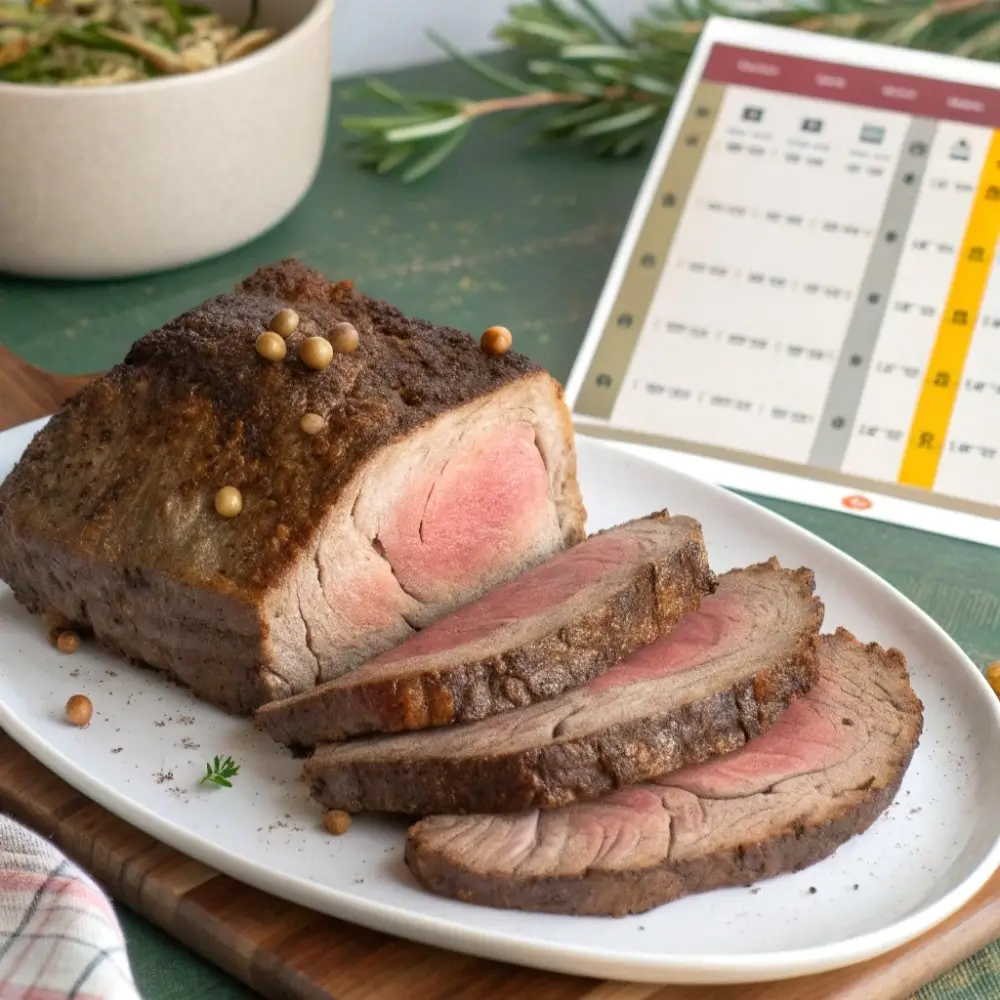
Slice across the grain for maximum tenderness.
Example Holiday Roast Timing Guide by Size
Use this for quick planning:
3–4 Pound Roast
-
Slow roast: 75–120 minutes
-
Moderate heat: 45–70 minutes
-
High-heat start: 50–75 minutes
5–6 Pound Roast
-
Slow roast: 120–180 minutes
-
Moderate heat: 90–120 minutes
-
High-heat start: 100–140 minutes
7–8 Pound Roast
-
Slow roast: 150–240 minutes
-
Moderate heat: 120–160 minutes
-
High-heat start: 130–185 minutes
9–10 Pound Roast
-
Slow roast: 180–300 minutes
-
Moderate heat: 150–200 minutes
-
High-heat start: 160–230 minutes
These are estimates—always pair them with thermometer checks.
Carryover Cooking: The Step That Saves Your Roast
Carryover cooking means the roast continues heating after you remove it from the oven. The internal temperature increases approximately 5–10°F.
This is why you always remove the roast before it reaches your desired final temperature.
Example
-
You want 130°F medium-rare
-
Remove from oven at 120°F
-
After resting, it rises to 130°F
Skipping this step is the main reason roasts become overcooked.
Creating Flavor Without Pork or Alcohol
All flavorings in this guide avoid pork, bacon, wine, beer, whisky, or any alcohol.
Flavor Boosters
-
Fresh garlic
-
Dried herbs (rosemary, thyme, parsley)
-
Olive oil
-
Black pepper
-
Smoked paprika
-
Onion powder
-
Sea salt
Herb Butter (Alcohol-Free)
Mix softened butter with garlic and herbs; spread over roast before cooking.
Broth-Based Au Jus
After roasting:
-
Use beef broth
-
Stir pan drippings
-
Simmer until slightly reduced
This creates a rich, holiday-worthy sauce—no alcohol needed.
Best Side Dishes for a Holiday Beef Roast
Your roast becomes even more impressive when paired correctly.
Potatoes
-
Mashed
-
Roasted baby potatoes
-
Garlic parsley potatoes
Vegetables
-
Roasted carrots
-
Green beans
-
Brussels sprouts
-
Asparagus
Breads
-
Dinner rolls
-
Herb focaccia
Salads
-
Caesar
-
Apple walnut salad
-
Simple mixed greens
These sides complement the roast without overpowering it.
Carving Techniques for Beautiful Presentation
Carving is important, especially for holiday meals.
For Boneless Roasts
-
Use a long carving knife
-
Slice across the grain
-
Keep slices even and consistent
For Larger Holiday Platters
Fan slices across the platter for dramatic effect.
Garnish with rosemary, thyme, or roasted vegetables.
Storing and Reheating Leftovers
Refrigerating
Store slices in airtight containers for up to 4 days.
Freezing
Wrap tightly and freeze for up to 2 months.
Reheating
Warm in the oven at 250°F for 10–15 minutes with a splash of broth.
Avoid harsh reheating methods that dry the meat.
Troubleshooting Common Issues
Roast Is Overcooked
-
Slice thinner
-
Serve with broth or au jus
-
Prevent next time by removing earlier from oven
Roast Is Undercooked
Return to the oven at 250°F and check every 5 minutes.
Crust Didn’t Brown
Use a high-heat blast: 500°F for 8–10 minutes.
Roast Cooked Unevenly
Always start with a room-temperature roast.
Too Salty
Balance with low-sodium sides or broth.
Frequently Asked Questions
How early can I season the roast?
Up to 24 hours in advance.
Should I cover the roast while cooking?
No—leave it uncovered to brown properly.
What thermometer should I use?
Any instant-read thermometer works well.
Can I slow roast at night?
Yes, but monitor internal temperature closely.
Can I cook a roast from frozen?
No. Thaw completely for best results.
Should the roast rest before slicing?
Always. Rest for at least 20 minutes.
Can I cook a roast at 325°F start to finish?
Yes—this method is reliable for most roasts.
Does roast size change the temperature?
No, only the cooking time.
Can I use broth instead of wine for sauces?
Yes—this guide uses only broth-based sauces.
What’s the best doneness for a holiday roast?
Medium-rare is the most popular.
Final Thoughts
With the right oven timing guide, a holiday beef roast becomes one of the easiest and most rewarding dishes to prepare. Whether you’re making a prime rib, ribeye roast, sirloin roast, or tenderloin, the step-by-step instructions and timing charts in this article help you achieve perfect results every time. Your roast will emerge tender, juicy, and beautifully browned—ready to take center stage at your holiday table.
This guide gives you everything: cooking times, temperature recommendations, resting advice, flavor tips, carving methods, storage instructions, and answers to common questions. With these tools, your holiday meals become effortless, predictable, and incredibly delicious.
A beautifully roasted beef centerpiece sets the tone for a warm, joyful gathering—one your family and guests will remember long after the meal is over.