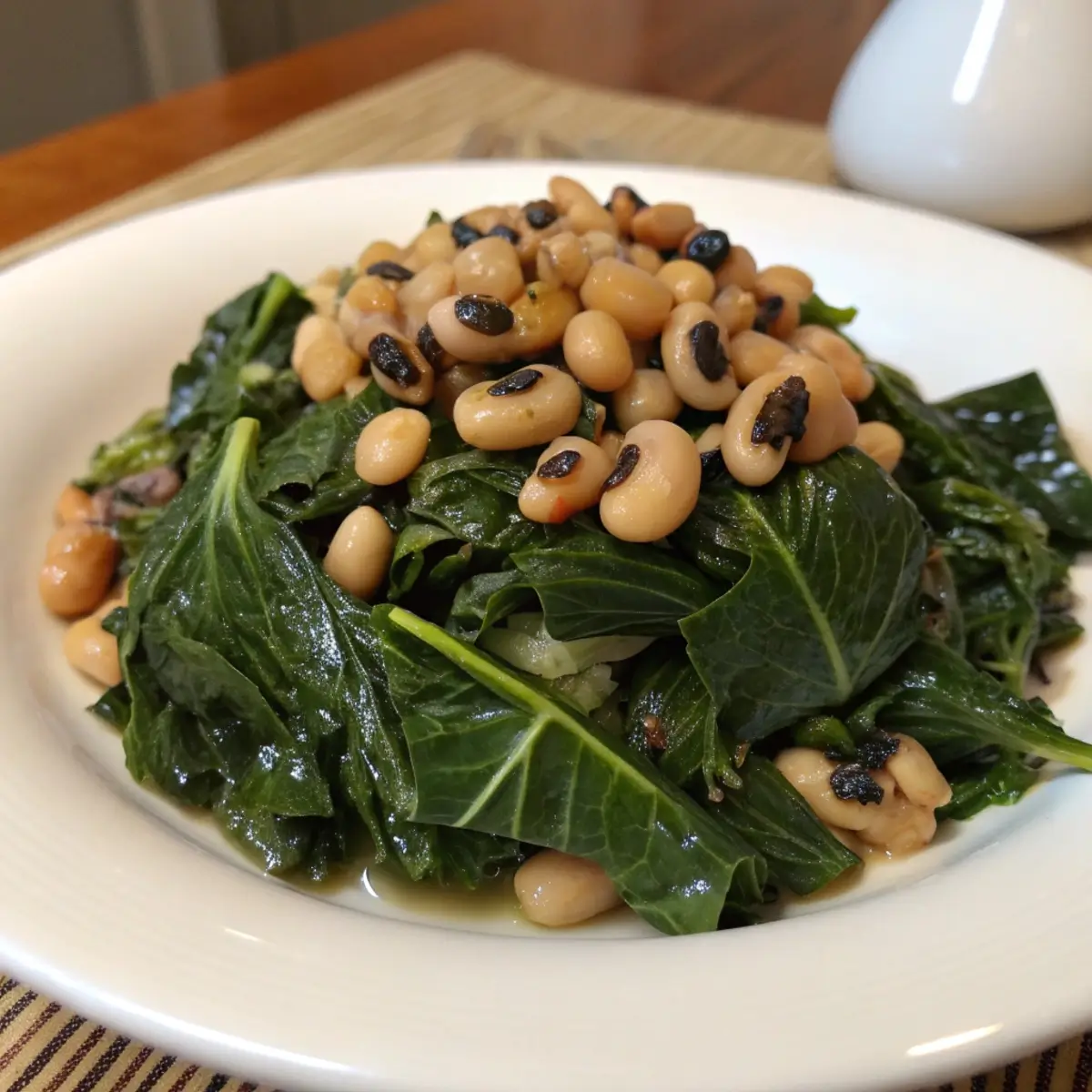
Why This Black Eyed Peas with Collard Greens Meal Stands Out
This dish is built on tradition, yet it offers a lighter, wholesome approach that brings out the natural flavors of the ingredients. Here’s what makes it unforgettable:
-
Rich flavor without pork – smoky spices, aromatics, and broth create depth naturally.
-
Hearty and comforting – peas bring creaminess while greens add earthy warmth.
-
Nutrient-packed – protein- and fiber-rich peas plus vitamin- and mineral-loaded collards.
-
Perfect for celebrations – especially New Year’s traditions rooted in prosperity and good luck.
-
Simple, affordable ingredients – making it ideal for weekly meal rotation.
-
Customizable – adjust seasonings, add vegetables, and tailor textures to your liking.
This isn’t just a plate of peas and greens—it’s a complete, comforting, wholesome meal.
Ingredients for Black Eyed Peas with Collard Greens
Below is a full breakdown of the ingredients that make this dish hearty and well-balanced.
Black Eyed Peas
You can use dried or canned peas:
-
Dried peas – best flavor and creamy texture
-
Canned peas – quicker and still delicious (rinse well)
Collard Greens
A signature part of this recipe. Look for:
-
Deep green, crisp leaves
-
No yellowing or wilting
-
Pre-chopped collards for convenience
Aromatic Vegetables
These are the heart of the flavor base:
-
Onion
-
Celery
-
Carrots
-
Garlic
-
Bell pepper (optional but adds color & sweetness)
Herbs & Spices
These bring warmth and savory richness:
-
Smoked paprika
-
Thyme
-
Bay leaves
-
Black pepper
-
Salt
-
Cayenne or crushed red pepper (optional for heat)
-
Fresh parsley or green onions to finish
Liquid & Cooking Fat
-
Vegetable broth (or water with extra seasoning)
-
Olive oil or avocado oil
These ensure the peas remain tender and the greens braise beautifully.
How to Prepare Black Eyed Peas with Collard Greens
This dish comes together in two flavorful parts—simmered peas and braised greens. They cook separately but complement each other perfectly on the plate.
Making the Black Eyed Peas
Step 1: Prepare the Peas
-
Dried peas: rinse, sort, and soak overnight (optional but recommended).
-
Canned peas: rinse and drain.
Step 2: Sauté the Aromatics
Heat oil in a pot. Add onions, celery, and carrots. Sauté until softened. Add garlic and bell pepper, cooking until fragrant.
Step 3: Add Spices
Stir in smoked paprika, thyme, black pepper, and salt. Toast briefly to deepen flavor.
Step 4: Add Peas and Broth
Pour in the peas and enough vegetable broth to cover. Drop in bay leaves.
Step 5: Simmer
Cook until tender:
-
Dried peas: 45–60 minutes
-
Canned peas: 20–25 minutes
Add liquid as needed to maintain a creamy consistency.
Step 6: Final Adjustments
Taste and adjust seasoning. Remove bay leaves. Set aside while you prepare the greens.
Making the Collard Greens
Step 1: Prepare the Greens
Wash thoroughly to remove grit. Remove tough stems and chop into ribbons if not pre-cut.
Step 2: Sauté Flavor Base
In a large pan, heat oil and sauté onions and garlic until fragrant.
Step 3: Add Greens
Add the collard greens in batches, wilting them down gently.
Step 4: Add Broth & Seasonings
Pour in vegetable broth, then season with salt, pepper, smoked paprika, and thyme.
Step 5: Braise
Cover and simmer for 25–35 minutes, or until greens reach your preferred tenderness.
Step 6: Finish
Taste and adjust seasoning. Add a squeeze of lemon for brightness if desired.
Serving the Meal
This dish works beautifully as a complete plate:
-
Spoon creamy black eyed peas over rice or serve them alongside the collard greens.
-
Garnish with parsley or green onions.
-
Add a side of cornbread or crusty bread to soak up the broth.
The earthy greens pair perfectly with the peas’ natural creaminess.
Flavor Tips for the Best Black Eyed Peas and Collard Greens
Layer Your Spices
Toasting smoked paprika and thyme with vegetables intensifies flavor naturally.
Don’t Rush the Simmer
Black eyed peas become creamy and flavorful when cooked slowly.
Add Greens at the Right Time
Overcooking can make them too soft—aim for tender but still vibrant.
Use Enough Broth
Both the peas and greens benefit from simmering in flavored liquid.
Balance with Acidity
A splash of lemon juice brightens the greens beautifully.
Healthy Variations
Tomato-Infused Version
Add diced tomatoes or tomato paste to the black eyed peas.
Vegetable-Packed Meal
Add zucchini, mushrooms, or sweet potatoes for extra nutrition.
Spicy Variation
Increase cayenne, add fresh jalapeños, or stir in chili flakes.
Creamier Peas
Mash a spoonful of peas into the pot for natural thickening.
Greens Upgrade
Mix collards with kale, mustard greens, or spinach.
High-Protein Bowl
Serve peas and greens over quinoa or farro.
Why This Dish Works Without Pork or Alcohol
Classic recipes often use ham hocks or alcohol-based liquids. This version achieves rich, layered flavor using:
-
Smoked paprika for the smoky note
-
Vegetable broth for body
-
Aromatic vegetables for natural sweetness
-
Slow simmering for depth
Nothing is missing—just the heaviness. It’s a lighter, cleaner, equally satisfying meal.
Nutritional Benefits
This meal is incredibly nutrient-dense:
Black Eyed Peas Provide
-
Plant-based protein
-
Fiber
-
Potassium
-
Iron
-
Folate
-
Complex carbohydrates
Collard Greens Offer
-
Vitamin K
-
Vitamin C
-
Calcium
-
Antioxidants
-
Fiber
-
Plant-based micronutrients
Together, they create a balanced, energizing, filling meal that supports overall wellness.
Meal Prep & Storage
This dish stores beautifully, making it perfect for weekly meal planning.
Refrigeration
-
Keep peas and greens separately or combined.
-
Refrigerate for 4–5 days.
Freezing
-
Both peas and greens freeze well.
-
Store for up to 3 months.
Reheating
-
Warm gently on the stovetop.
-
Add extra broth or water to restore texture.
The flavors deepen after a day or two, making leftovers even more delicious.
How to Serve for New Year’s Tradition
Black eyed peas symbolize good luck and collard greens symbolize prosperity. Together, they make a meaningful New Year’s meal.
For a traditional plate:
-
Serve peas over rice.
-
Serve collard greens on the side.
-
Add cornbread to complete the celebration.
This version keeps the symbolism alive while staying wholesome and pork-free.
Frequently Asked Questions
Can I use canned black eyed peas?
Yes. Rinse well and shorten cooking time.
Should I soak dried peas?
It’s helpful but not required. Unsoaked peas just take longer.
Can I make this meal spicy?
Absolutely—add cayenne, chili flakes, or sliced jalapeños.
Can I add meat if I want to?
Yes—use smoked turkey or chicken, avoiding pork.
Can I cook peas and greens together?
You can, but cooking separately helps maintain perfect textures.
What if my peas are too thick?
Add more broth to loosen them.
What if my greens taste bitter?
A little lemon juice balances bitterness beautifully.
Can I use kale instead of collards?
Yes, though kale cooks faster.
How can I make the dish creamier?
Mash part of the peas or add a splash of coconut milk.
Is this recipe vegan?
Yes, as long as vegetable broth is used.
Final Thoughts
Black Eyed Peas with Collard Greens is more than a simple dinner—it’s a timeless comfort meal rooted in tradition and nourishment. By simmering peas until creamy and braising greens until tender, you create a plate that’s deeply satisfying yet wonderfully wholesome. This version stays true to comforting flavors while keeping things nutritious and free of pork, alcohol, and heaviness.
Perfect for cold-weather dinners, cozy weeknights, or meaningful New Year’s meals, this recipe brings warmth, nourishment, and joy to any table. Serve it with rice, cornbread, or whole grains, savor the savory broth, and enjoy every bite of this classic, home-style comfort dish.