A Structurally Sound Dip That Looks as Good as It Tastes
A great 7 layer dip should do more than taste good. It should behave well. Nothing ruins a beautiful dip faster than layers collapsing into each other after the first few scoops. When guests return for seconds and thirds, the dish should still look inviting, not smeared or watery.
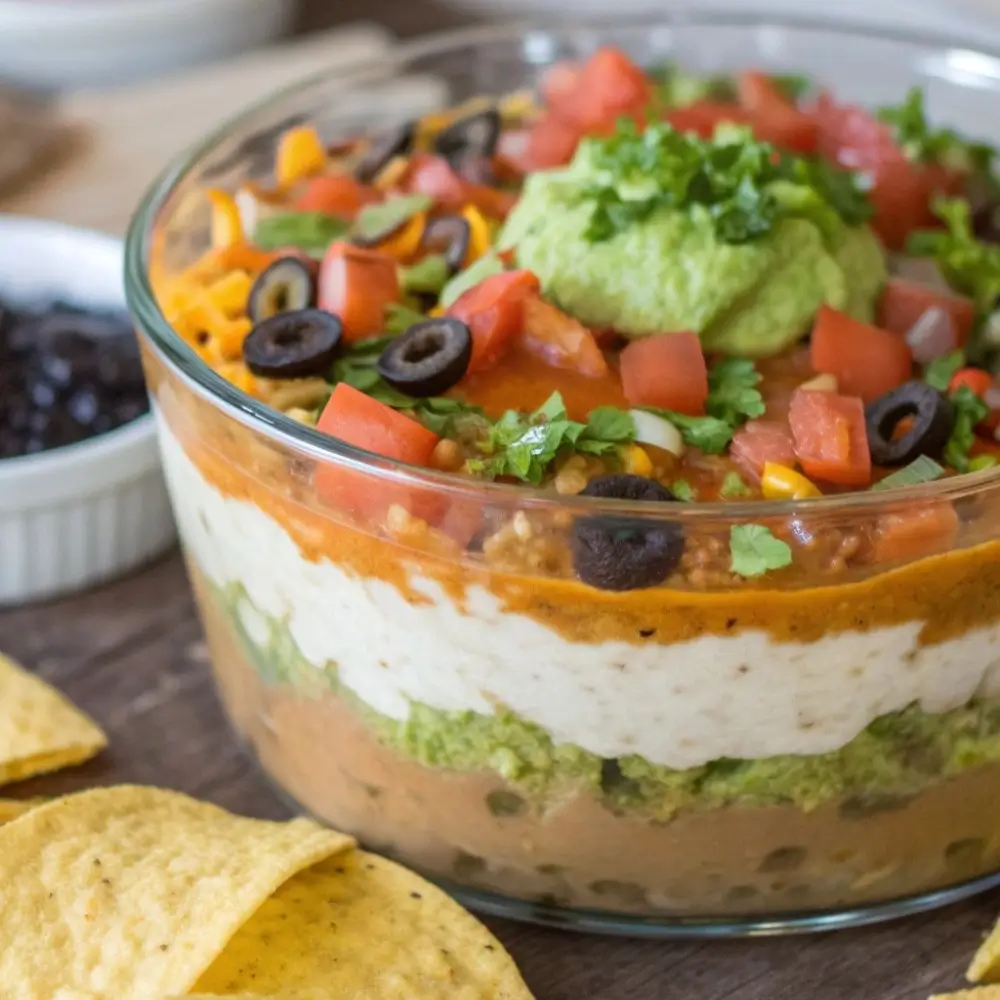
This 7 layer dip is specifically designed to hold its layers beautifully from start to finish. Each component is chosen, prepared, and layered with structure in mind. The result is a dip that stays neat, scoopable, and visually appealing even during long snack sessions or busy parties.
Creamy without being loose. Bold without being messy. Structured without feeling stiff. This recipe strikes the perfect balance between form and comfort.
Whether you’re serving it at a gathering, setting it out for game day, or letting it anchor a snack table for hours, this dip keeps its shape and its appeal.
Why Layer Stability Matters in a 7 Layer Dip
Layered dips are meant to be generous and shareable. They invite people to scoop freely and return often. But when layers bleed together or slide apart, the experience suffers.
A dip that holds its layers:
-
Looks appetizing throughout the event
-
Makes scooping easier and cleaner
-
Prevents watery textures
-
Keeps flavors balanced in every bite
-
Feels thoughtfully prepared
This recipe focuses on structural integrity just as much as flavor, ensuring the dip performs as well as it presents.
The Science Behind a Dip That Stays Neat
Holding layers isn’t about luck. It’s about understanding how ingredients behave and how they support one another.
Thickness Over Thinness
Each layer must be thick enough to support the ones above it. Loose or watery ingredients cause collapse.
Moisture Control
Excess liquid is the number one enemy of clean layers. Draining and drying ingredients is essential.
Order Matters
The sequence of layers determines how well the dip holds together. Heavier, denser layers belong at the bottom. Lighter, fresher ingredients work best on top.
Ingredient Philosophy for Strong, Clean Layers
This recipe uses familiar ingredients, but they’re prepared with intention. Each one serves a specific purpose in maintaining structure.
Base Layers Provide Support
The bottom layers create a stable foundation that keeps the dip anchored.
Middle Layers Act as Buffers
Creamy and savory layers in the center prevent moisture migration and flavor imbalance.
Top Layers Add Texture Without Weight
Fresh toppings bring brightness without compromising stability.
Full Ingredient List
-
2 cups refried beans, smooth and thick
-
8 ounces cream cheese, fully softened
-
1 cup thick sour cream
-
1 teaspoon ground cumin
-
1 teaspoon garlic powder
-
Salt to taste
-
1 ½ cups chunky salsa or finely diced tomatoes, very well-drained
-
2 cups finely shredded cheese (cheddar, Monterey Jack, or a blend)
-
½ cup finely chopped green onions
-
½ cup sliced black olives, patted dry
-
Optional garnish: chopped fresh cilantro or diced avocado added just before serving
Choosing the Right Dish for Layer Control
The serving dish plays a major role in whether layers stay intact.
Ideal Dish Characteristics
-
Shallow to medium depth
-
Wide surface area
-
Straight or gently sloped sides
-
Clear glass preferred for visibility
Avoid narrow or overly deep dishes, which force guests to dig and disrupt layers.
Preparing Ingredients for Maximum Structure
Refried Beans
Beans should be smooth and dense. If they’re too stiff, allow them to soften slightly at room temperature. If too loose, refrigerate briefly to firm up.
Cream Cheese and Sour Cream Blend
Softened cream cheese ensures a smooth spread that won’t tear lower layers. Mixing it thoroughly with sour cream creates a stable, creamy buffer.
Salsa or Tomatoes
Drain aggressively. Use a fine strainer and let excess liquid drip away completely. Pat dry if needed.
Cheese and Toppings
Finely shredded cheese creates a cohesive layer that binds well. Toppings should be evenly chopped to distribute weight.
Step-by-Step Assembly for Layers That Hold
Layer One: Bean Foundation
Spread the refried beans evenly across the bottom of the dish. Smooth completely to eliminate dips or air pockets. This layer anchors everything above it.
Layer Two: Creamy Seasoned Base
Mix cream cheese, sour cream, cumin, garlic powder, and salt until perfectly smooth. Gently spread over the beans, starting in the center and working outward to avoid mixing.
Layer Three: Salsa or Tomato Layer
Spoon the drained salsa or tomatoes evenly across the creamy layer. Keep this layer thin and light to prevent moisture buildup.
Layer Four: Shredded Cheese Barrier
Sprinkle the cheese evenly over the salsa layer. This acts as a stabilizing barrier that helps keep upper layers dry and intact.
Layer Five: Green Onions
Scatter chopped green onions evenly for freshness and mild bite.
Layer Six: Black Olives
Add sliced black olives, spacing them evenly to avoid clustering and uneven weight.
Layer Seven: Fresh Finish
Add cilantro or avocado just before serving to preserve structure and color.
Why This Dip Holds Its Shape While Serving
Several intentional choices keep this dip neat:
-
Thick base layers
-
Drained ingredients
-
Even distribution
-
Proper layering order
-
Gentle spreading techniques
Each scoop pulls through all layers without dragging them apart.
Texture and Flavor Balance
Creamy Without Collapse
The creamy elements are rich but structured, offering comfort without looseness.
Fresh Without Wateriness
Fresh ingredients are controlled and placed where they won’t disrupt stability.
Savory Without Overpowering
Seasoning is balanced so no single layer dominates.
Every bite remains consistent from edge to center.
Ideal Occasions for a Structured 7 Layer Dip
This dip is perfect for:
-
Parties with long serving times
-
Game days
-
Potlucks
-
Snack tables
-
Gatherings where food sits out
It looks just as good an hour later as it does when first served.
Make-Ahead Tips for Layer Integrity
This dip can be assembled up to 24 hours in advance.
Best practices:
-
Cover tightly with plastic wrap
-
Refrigerate on a flat surface
-
Add avocado or herbs just before serving
Chilling helps layers firm up and stay clean.
Storage and Leftover Advice
Store leftovers covered in the refrigerator for up to two days.
The layers remain intact best within the first day. Avoid stirring or re-spreading after serving.
Freezing is not recommended due to texture changes.
Customizing Without Sacrificing Structure
Extra Firm Version
Use slightly thicker refried beans and reduce salsa quantity.
Mild Flavor Option
Replace salsa with plain diced tomatoes and reduce seasoning.
Fresh Accent Variation
Add finely diced bell peppers above the cheese layer.
Visual Upgrade
Use alternating colors of toppings for contrast while keeping layers light.
All variations maintain clean layers when prepared carefully.
Best Chips for a Dip That Holds Its Layers
-
Thick tortilla chips
-
Scoop-style chips
-
Baked corn chips
-
Firm vegetable dippers
Thin chips can break and disrupt the structure.
Serving Tips for Long Snack Sessions
-
Use a wide-mouth serving spoon for clean scoops
-
Encourage scooping from different areas
-
Keep napkins nearby
-
Avoid overfilling the dish
These habits help preserve the dip’s appearance.
Frequently Asked Questions
Why do my layers usually collapse?
Excess moisture, thin ingredients, or incorrect layering order are the most common causes.
Can this dip be made ahead of time?
Yes. It holds its layers best when chilled for at least 30 minutes before serving.
How do I keep the dip neat during long events?
Use thick layers, drain ingredients thoroughly, and serve chilled.
Is this dip served warm or cold?
It is best served chilled or slightly cool for structure.
Does this recipe contain pork or alcohol?
No. It contains no pork, bacon, wine, beer, or alcohol of any kind.
Can I double the recipe?
Yes. Use a larger shallow dish and maintain even layer thickness.
Can I use homemade refried beans?
Yes, as long as they are smooth and thick.
What makes this recipe different from regular 7 layer dips?
It is intentionally designed for structure and layer stability.
Why This 7 Layer Dip Is Worth Making
A dip that holds its layers feels intentional. It shows care without complication. This recipe proves that classic dishes can be elevated simply by understanding how they work.
It’s dependable, visually appealing, and satisfying from the first scoop to the last. No mess, no collapse, no disappointment.
When you want a layered dip that performs as well as it tastes, this is the recipe that delivers.