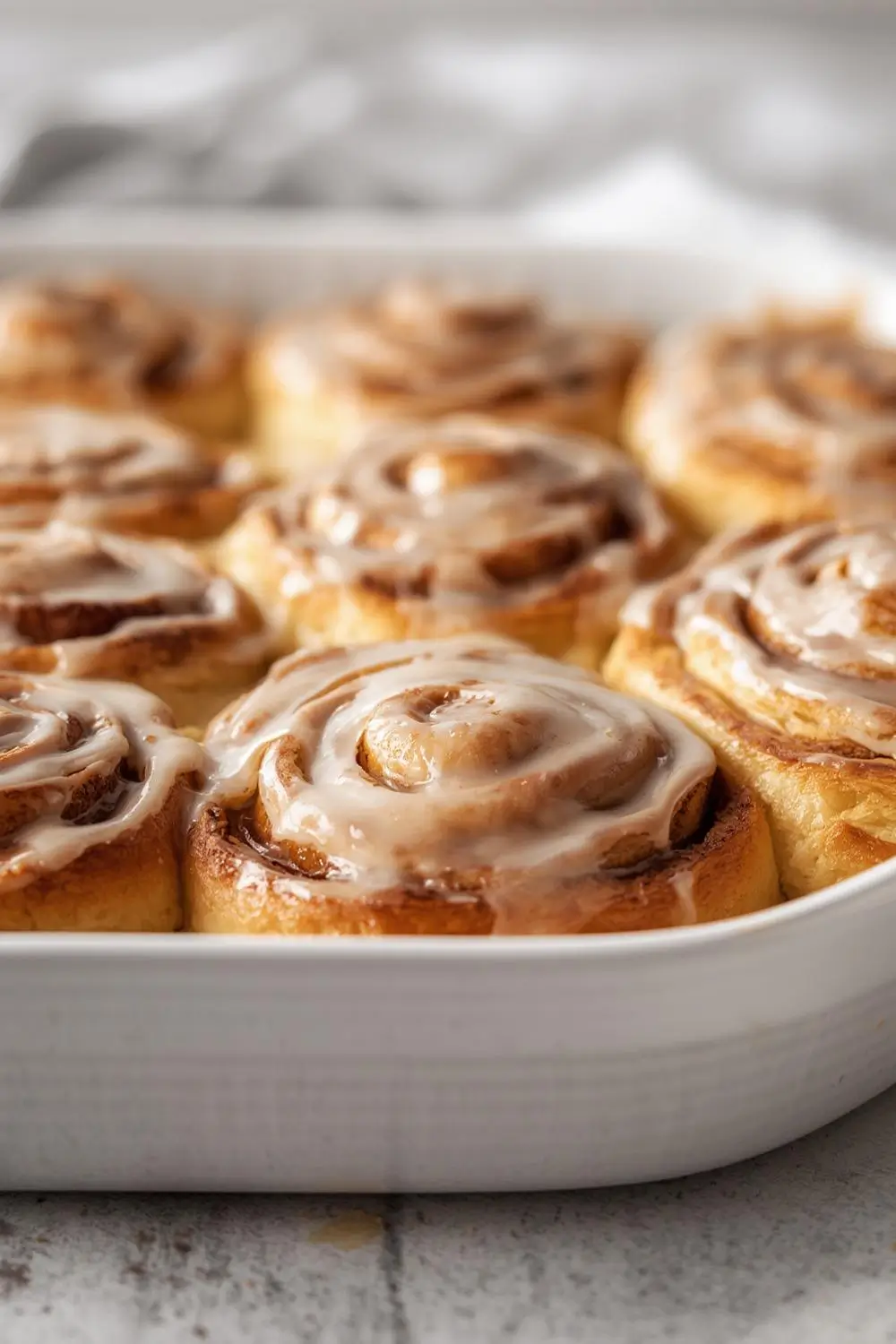
The air fills with an intoxicating aroma aswarm, buttery cinnamon rolls emerge from the oven, their golden-brown tops glistening with a sweet, creamy glaze. There’s something undeniably magical about biting into a thick, fluffy cinnamon roll – the tender, pillowy center yielding slightly to the tooth, the rich cinnamon-sugar filling bursting with each bite, and the delicate, slightly sweet crust offering a satisfying crunch. These aren’t just rolls; they’re a celebration of comfort, a testament to the simple joy of homemade goodness. Today, we’re unlocking the secrets to creating bakery-style cinnamon rolls right in your own kitchen, achieving that perfect balance of thickness, fluffiness, and bold cinnamon flavor that makes them irresistible.
Ingredients: The Foundation of Flavour
Creating these thick, fluffy wonders starts with understanding the role of each ingredient. Here’s what you’ll need:
- Warm Milk (1 cup / 240ml): Crucial for activating the yeast. It should be comfortably warm, around 105-110°F (40-43°C) – not hot, or it will kill the yeast. Whole milk adds richness; plant-based milk works well too.
- Active Dry Yeast (2 1/4 tsp / 1 standard packet): The leavening agent that makes the dough rise. Ensure it’s fresh and active.
- Granulated Sugar (1/4 cup / 50g): Feeds the yeast and adds sweetness. A small amount is also added to the dry ingredients.
- Salt (1 1/4 tsp / 6g): Enhances all the flavours, balancing the sweetness. Don’t skip it!
- Large Eggs (2, room temperature): Add richness, structure, and moisture. Room temperature eggs incorporate better.
- Unsalted Butter (1/2 cup / 113g, melted): Provides incredible flavour and tenderness. Let it cool slightly before adding to the warm milk mixture.
- Bread Flour (4 1/2 cups / 562g): The key to structure and chew. Bread flour has a higher protein content than all-purpose flour, creating more gluten for a stronger, more elastic dough that holds its thick shape beautifully. All-purpose flour can be substituted, but the texture will be slightly less chewy.
- Granulated Sugar (1/4 cup / 50g): Added to the dry ingredients for sweetness throughout.
- Ground Cinnamon (2 tbsp / 12g): The star of the filling. Use a high-quality, fresh cinnamon for the boldest flavour.
- Softened Butter (1/2 cup / 113g): For the filling, creating that rich, spreadable layer.
- Brown Sugar (1 cup / 200g, packed): Adds deep molasses notes and helps create that signature gooey caramelisation.
- Cream Cheese (4 oz / 113g, softened): The base for the luxurious cream cheese frosting.
- Unsalted Butter (4 tbsp / 57g, softened): Adds richness to the frosting.
- Powdered Sugar (2 cups / 240g): The sweet backbone of the frosting.
- Vanilla Extract (1 tsp): Enhances all the flavours.
- Salt (1/4 tsp): A tiny pinch balances the sweetness.
Step-by-Step Instructions: From Dough to Deliciousness
1. Activate the Yeast: In a large mixing bowl or the bowl of your stand mixer, combine the warm milk, 1/4 cup of the granulated sugar, and the active dry yeast. Stir gently and let it sit for 5-10 minutes, until it becomes foamy on top. This confirms the yeast is active.
2. Combine Wet Ingredients: Add the melted butter (cooled slightly), room temperature eggs, and salt to the yeast mixture. Whisk thoroughly until well combined.
3. Incorporate Flour: Gradually add the bread flour and the remaining 1/4 cup granulated sugar to the wet mixture. Using a dough hook on low speed (or a sturdy spoon if mixing by hand), mix until a shaggy dough forms. It will be sticky.
4. Knead for Elasticity: Increase the speed to medium-low (or switch to kneading by hand on a lightly floured surface). Knead for 8-10 minutes. The dough is ready when it becomes smooth, elastic, and slightly tacky but doesn’t stick excessively to your hands or the bowl. It should pass the “windowpane test” – stretching thin enough to see light through without tearing.
5. First Rise (Bulk Fermentation): Lightly grease a large bowl with oil. Place the dough ball inside, turning it once to coat it lightly. Cover the bowl tightly with plastic wrap or a damp kitchen towel. Let it rise in a warm, draft-free spot until doubled in size, about 1 to 1.5 hours. The dough should look puffy and spring back slowly when gently poked.
6. Prepare the Filling: While the dough rises, make the cinnamon sugar filling. In a medium bowl, combine the softened butter, brown sugar, and cinnamon. Mix until smooth and spreadable. Set aside.
7. Shape the Rolls: Once the dough has doubled, punch it down gently to release the air. Turn it out onto a lightly floured surface. Roll the dough into a large rectangle, roughly 18×24 inches (45×60 cm). Aim for a thickness of about 1/4 inch (6mm). This thickness is key for the ultimate fluffiness.
8. Add the Filling: Spread the cinnamon sugar filling evenly over the entire surface of the dough, leaving a 1-inch border along one long edge. This border helps seal the roll.
9. Roll and Cut: Starting from the long edge covered in filling, carefully roll the dough tightly into a log. Pinch the seam closed firmly. Using a sharp knife or dental floss, cut the log into 12 equal pieces (about 1.5-2 inches thick). Place the rolls cut-side up in a lightly greased 9×13 inch (23×33 cm) baking dish, leaving a little space between them. They will expand significantly.
10. Second Rise (Proofing): Cover the baking dish loosely with plastic wrap or a damp towel. Let the rolls rise again in a warm spot until they are noticeably puffy and have nearly doubled in size, about 30-45 minutes. They should look very full.
11. Preheat and Bake: While the rolls are proofing, preheat your oven to 350°F (175°C). Bake the rolls for 25-30 minutes, or until the tops are deep golden brown and the rolls are cooked through. A thermometer inserted into the center should read around 190-195°F (88-90°C). They should sound hollow when tapped on the bottom.
12. Make the Frosting: While the rolls bake, prepare the cream cheese frosting. In a medium bowl, beat the softened cream cheese and softened butter together until smooth. Gradually add the powdered sugar, beating well after each addition. Beat in the vanilla and a pinch of salt until the frosting is light and fluffy.
13. Frost and Serve: As soon as the rolls come out of the oven, spread the frosting generously over the warm rolls. The heat from the rolls will melt the frosting slightly, creating a beautiful, glossy glaze that seeps into every crevice. Serve immediately for the ultimate experience. Leftovers can be stored and reheated.
Variations and Substitutions: Making it Your Own
- Different Fillings: Swap the cinnamon sugar filling for a chocolate-hazelnut spread (like Nutella), a brown sugar-cinnamon swirl, or even a simple lemon zest and sugar mixture. For a richer filling, add chopped nuts (walnuts, pecans) or raisins.
- Flavoured Butters: Use browned butter for the filling and frosting for an extra nutty depth. Substitute some of the granulated sugar in the filling with brown sugar for deeper caramel notes.
- Gluten-Free Option: Use a high-quality gluten-free all-purpose flour blend (ensure it contains xanthan gum). The dough may be slightly more delicate; handle gently and allow for a slightly longer rise time. The texture won’t be identical but can be delicious.
- Vegan Option: Substitute plant-based milk (soy, oat, almond) for dairy milk. Use vegan butter for all the butter. Use a flax egg (1 tbsp ground flaxseed + 3 tbsp water, let sit 5 mins) in place of the regular eggs. Ensure your yeast is vegan-certified. The frosting can be made with vegan cream cheese and vegan butter.
- Fruit Additions: Fold in diced apples, pears, or berries into the filling for a fruity twist. Ensure they are well-drained to prevent excess moisture.
- Spice Variations: Add a pinch of nutmeg, cardamom, or ginger to the cinnamon sugar filling for a unique flavour profile.
Storage and Reheating: Keeping the Magic Alive
- Room Temperature: Cool completely, then store tightly covered at room temperature for up to 2 days. Reheat individually in the microwave for 15-20 seconds or in a warm oven (300°F / 150°C) for a few minutes.
- Refrigeration: Cool completely, then wrap tightly in plastic wrap or place in an airtight container. Store in the refrigerator for up to 4 days. Reheat as above.
- Freezing: Cool completely. Wrap individual rolls tightly in plastic wrap, then place in a freezer-safe bag or container. Freeze for up to 3 months. To reheat, thaw overnight in the refrigerator, then reheat as above. For best results, reheat from frozen in the microwave for 30-45 seconds or in a warm oven.
Common Mistakes to Avoid: Ensuring Perfect Rolls Every Time
1. Killing the Yeast: Using water that’s too hot (above 110°F / 43°C) will kill the yeast. Ensure your milk is comfortably warm, not scalding.
2. Under-Kneading: Insufficient kneading results in a weak dough that won’t rise properly or hold its shape. Knead until the dough is smooth and elastic.
3. Over-Kneading: While important, over-kneading can make the dough tough. Stop once it passes the windowpane test.
4. Rushing the Rise: Dough needs time to develop flavour and structure. Don’t skip or shorten the rise times. A warm, draft-free spot is essential.
5. Too Much Flour During Kneading: Adding too much flour while kneading makes the dough dry and tough. Use just enough to prevent sticking, and trust the kneading time.
6. Overfilling the Rolls: While you want a generous filling, too much can cause the rolls to burst open during baking. Spread it evenly but don’t overfill.
7. Underbaking: Rolls need to be baked until golden brown and cooked through. Underbaked rolls will be doughy in the center.
8. Frosting Too Early: Frosting warm rolls is fine and delicious! Frosting cold rolls can make the frosting slide off. Frost immediately after baking.
9. Using All-Purpose Flour: While possible, bread flour provides the best structure and chew for thick, fluffy rolls. All-purpose flour yields a slightly less chewy result.
10. Not Letting the Dough Rest After Punching Down: Punching down releases gas, but letting the dough rest for 5-10 minutes before rolling makes it easier to handle and roll out.
Frequently Asked Questions: Your Cinnamon Roll Queries Answered
1. Can I make these ahead of time? Absolutely! You can prepare the dough through the first rise, shape the rolls, and let them proof in the pan overnight in the refrigerator. In the morning, let them come to room temperature for 30-45 minutes before baking.
2. Why are my rolls dense? This usually happens if the dough wasn’t kneaded enough, the yeast wasn’t active, the rise times were too short, or the oven wasn’t hot enough. Ensure proper kneading, active yeast, sufficient rising time, and a preheated oven.
3. How do I know when the rolls are done baking? They should be deep golden brown on top and sound hollow when tapped on the bottom. A thermometer inserted into the center should read 190-195°F (88-90°C).
4. Can I use a bread machine? Yes! Add all ingredients to the bread machine in the order recommended by the manufacturer (usually liquid first, then dry, with yeast last). Select the dough cycle. Once the cycle finishes, proceed with shaping, rising, and baking as directed.
5. What’s the best way to store leftover rolls? Cool completely, then store tightly covered at room temperature for up to 2 days, or in the refrigerator for up to 4 days. Reheat gently to restore freshness.
6. Can I freeze the baked rolls? Yes! Cool completely, wrap individually in plastic wrap, then place in a freezer-safe bag or container. Freeze for up to 3 months. Thaw overnight in the refrigerator and reheat as needed.
7. Why did my frosting get runny? This can happen if the cream cheese or butter wasn’t soft enough, or if you added too much liquid. Ensure ingredients are softened, and add powdered sugar gradually until the desired consistency is reached. A pinch of salt helps balance sweetness.
8. Can I make these without a stand mixer? Yes! You can knead the dough by hand on a lightly floured surface for about 10-15 minutes until smooth and elastic. It requires a bit more effort but is entirely doable.
9. What’s the difference between bread flour and all-purpose flour? Bread flour has a higher protein content (around 12-14%), which creates more gluten. This results in a chewier, more elastic texture, crucial for thick, fluffy rolls. All-purpose flour (around 10-12% protein) yields a slightly softer, less chewy roll.
10. How can I make the rolls sweeter? Increase the granulated sugar in the dough to 1/4 cup. You can also add a tablespoon of vanilla extract to the dough for extra sweetness and flavour.
Conclusion: The Ultimate Comfort
Creating these thick and fluffy bakery-style cinnamon rolls is more than just baking; it’s an act of love, a ritual that fills your home with warmth and anticipation. The process, from the initial activation of the yeast to the final, glorious moment of pulling a warm roll from the oven, is deeply satisfying. The result – rolls that are tender, pillowy, and bursting with cinnamon sweetness – is pure comfort. They are perfect for a leisurely weekend brunch, a special holiday treat, or simply a moment of pure indulgence. The aroma alone is worth the effort, and the taste? It’s a reminder of the simple, profound joy found in a perfectly baked treat. So, gather your ingredients, embrace the process, and enjoy the delicious reward of your own bakery-style cinnamon rolls. Happy baking!