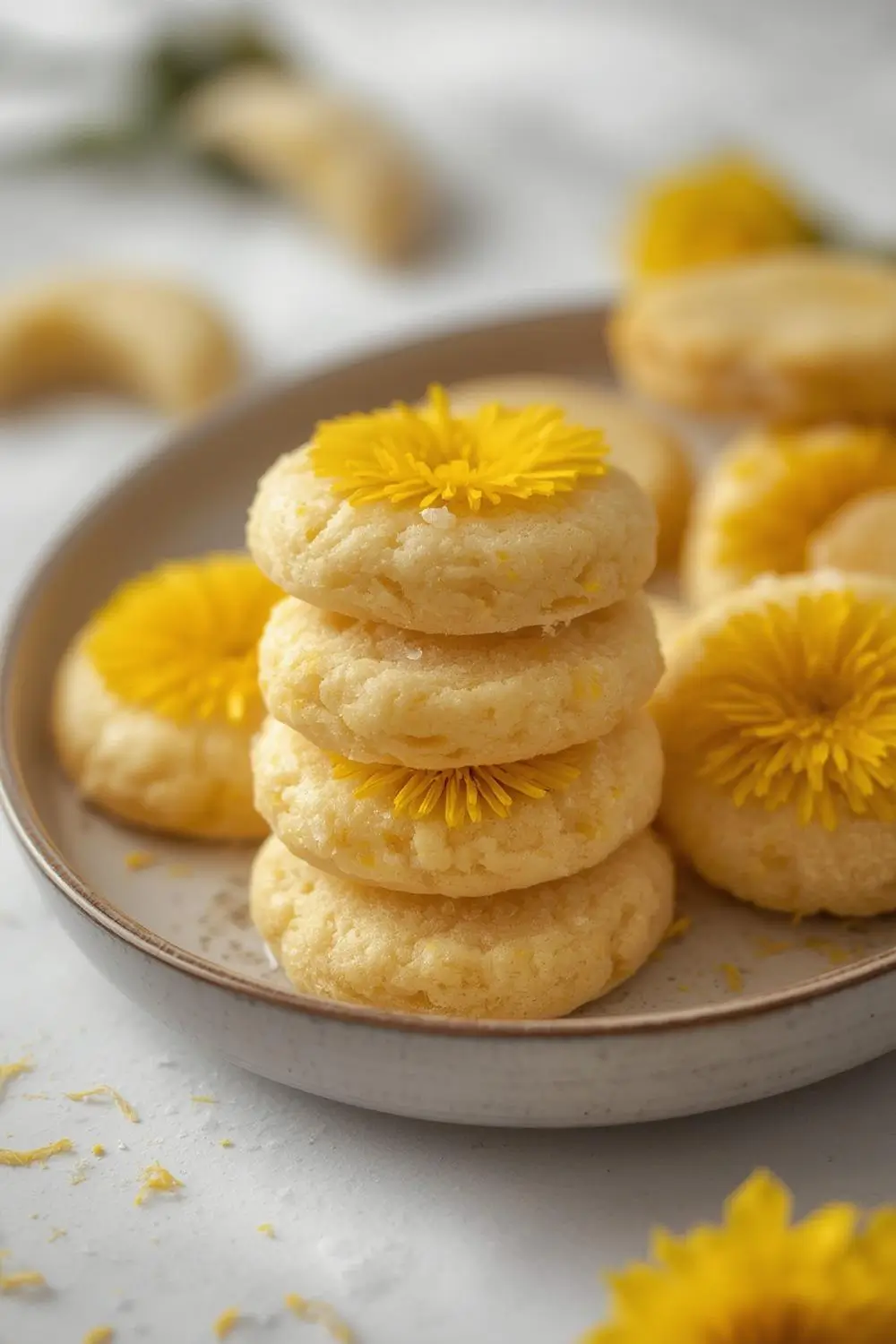
Spring whispers its arrival, painting the world in vibrant greens and bursts of sunshine yellow. It’s the season when dandelions, often dismissed as pesky weeds, transform into nature’s most delicate edible treasures. These Dandelion Flower Cookies capture that fleeting magic, turning humble petals into a stunning, subtly sweet shortbread that’s utterly charming and perfect for celebrating the season. Imagine biting into a tender, buttery cookie where the gentle, honey-like essence of spring dandelions dances on your tongue, framed by the crisp, sandy texture of classic shortbread. It’s a dessert that feels like a quiet picnic in a sun-drenched meadow.
This recipe is designed for simplicity and beauty, requiring no fancy equipment. The key lies in sourcing the freshest, most vibrant yellow dandelion petals, ensuring they haven’t been sprayed with any chemicals. The process is straightforward: infuse the petals into the dough, press them gently onto the surface before baking, and watch as they create a stunning, edible garnish. The result is a cookie that’s visually captivating, deliciously unique, and a conversation starter at any gathering. Whether you’re hosting a spring tea party or simply craving a light, natural sweet treat, these cookies deliver pure, unadulterated joy.
Ingredients with Explanations
- All-Purpose Flour: The backbone of the shortbread. It provides structure and a subtle, neutral flavor that lets the dandelion essence shine. Use a spoon-and-level method for accuracy.
- Unsalted Butter: Crucial for richness and texture. Use cold, cubed butter for the best results. Its flavor is the canvas for the floral notes.
- Granulated Sugar: Adds sweetness and helps create a tender crumb. The fine texture ensures even distribution.
- Dandelion Petals (Fresh, Organic): The star ingredient! Harvest from pesticide-free lawns or fields. Rinse gently and pat completely dry. Use only the yellow petals, discarding the green sepals and stems. About 1/4 to 1/3 cup tightly packed petals are needed.
- Vanilla Extract: Enhances the overall flavor profile, complementing the subtle floral notes beautifully.
- Salt: A pinch balances the sweetness and amplifies the other flavors. Use fine sea salt or table salt.
- Optional: A tiny pinch of ground cinnamon or cardamom can add a lovely warm depth if desired.
Step-by-Step Instructions with Tips
1. Prepare the Petals: Gently rinse the dandelion petals under cool water. Pat them extremely dry using paper towels. This prevents excess moisture from making the dough soggy. Set aside.
2. Combine Dry Ingredients: In a medium bowl, whisk together the flour, salt (and optional spices) until well combined. Set aside.
3. Cream the Butter and Sugar: In a large bowl, beat the cold, cubed butter and granulated sugar together using an electric mixer (or a sturdy whisk) on medium speed until the mixture becomes pale, fluffy, and noticeably lighter in color (about 3-5 minutes). Scrape down the sides of the bowl as needed.
4. Incorporate Flavorings: Add the vanilla extract and beat until fully incorporated.
5. Add the Dandelion Petals: Reduce the mixer speed to low. Gradually add the prepared dandelion petals, mixing just until they are evenly distributed throughout the butter-sugar mixture. Be careful not to overmix, which could bruise the petals and release bitter compounds.
6. Fold in the Flour: Add the dry flour mixture to the wet ingredients. Mix on low speed or fold gently with a spatula until the dough just comes together and no dry flour remains. The dough will be soft and slightly crumbly at first.
7. Chill the Dough: Divide the dough in half. Place each half between two sheets of parchment paper. Roll out to a thickness of about 1/4 inch (6mm). Chill the rolled dough in the refrigerator for at least 30 minutes, or until firm. This chilling is essential for easy cutting and preventing spreading.
8. Cut and Decorate: Preheat your oven to 300°F (150°C). Line baking sheets with parchment paper. Remove the chilled dough from the fridge. Carefully peel off the top parchment sheet. Using a sharp knife or cookie cutter (round, flower-shaped, or simple shapes work beautifully), cut out cookies. Place them on the prepared baking sheets, leaving about 1 inch (2.5cm) between each cookie.
9. Press Petals: While the cookies are still on the baking sheet, gently press a few extra fresh dandelion petals onto the top of each cookie. This adds a beautiful, natural garnish.
10. Bake: Bake the cookies in the preheated oven for 20-25 minutes. They are done when the edges are just starting to turn a very pale golden brown and the centers look set but not wet. Rotate the baking sheets halfway through baking for even cooking.
11. Cool: Remove the baking sheets from the oven and let the cookies cool on the sheets for 5 minutes. Then, carefully transfer them to a wire rack to cool completely. They will firm up as they cool.
Cooking Variations and Substitutions
- Flavor Variations: For a different twist, replace the vanilla extract with almond extract or lemon zest. Add a teaspoon of orange zest for a bright note.
- Texture Variations: For a slightly crispier cookie, bake at 325°F (160°C) for 25-28 minutes. For a softer, more tender cookie, bake at 275°F (135°C) for 30-35 minutes.
- Sugar Substitutions: Use granulated coconut sugar or cane sugar for a slightly different flavor profile. Avoid powdered sugar in the dough itself.
- Flour Substitutions: While all-purpose flour is ideal, you can use a 1:1 gluten-free flour blend (ensure it’s a 1:1 blend for shortbread). The texture may be slightly different.
Dandelion Alternatives: If fresh petals are unavailable, you can use a very small* amount (1/4 tsp) of high-quality culinary dandelion root powder, but the flavor will be much more subtle and earthy. Avoid using dried petals, as they lose their delicate flavor.
- Decorations: Instead of pressing petals, you could sprinkle the tops with a tiny bit of coarse sea salt or a dusting of powdered sugar after baking.
Storage and Reheating Tips
- Storage: Once completely cooled, store the cookies in an airtight container at room temperature. They will keep for up to 5 days. For longer storage, freeze the cooled cookies in a single layer on a baking sheet until firm, then transfer to an airtight container or freezer bag. They freeze well for up to 3 months. Thaw at room temperature.
- Reheating: To restore crispness, place the cookies on a baking sheet and warm in a 300°F (150°C) oven for 3-5 minutes. For a softer texture, microwave a single cookie for 10-15 seconds. Avoid overheating.
Common Mistakes to Avoid
1. Using Wet Petals: This is the biggest culprit for soggy cookies. Ensure petals are thoroughly dry.
2. Overmixing the Dough: Overmixing develops gluten, leading to tough cookies. Mix just until combined.
3. Skipping the Chill: Skipping chilling makes the dough too soft to cut cleanly and causes excessive spreading.
4. Overbaking: Baking too long makes cookies hard and dry. Watch for the edges just turning pale gold.
5. Using Non-Organic Petals: Pesticides and herbicides can be harmful. Only use petals from areas you know are chemical-free.
6. Not Patting Petals Dry: Even a little moisture can affect the dough and baking.
FAQs
- Can I use dandelion petals from my lawn? Only if you are absolutely certain* they haven’t been treated with pesticides, herbicides, or fertilizers. Organic lawns are best.
- What do dandelion petals taste like? They have a very subtle, honey-like, slightly bitter, and floral flavor. It’s delicate and not overpowering.
- Can I make these cookies without a food processor? Yes! You can cream the butter and sugar by hand with a sturdy whisk or wooden spoon, though it takes a bit more effort. Folding in the flour can also be done by hand.
- Why do the petals sometimes turn brown? This can happen if the petals are bruised during mixing or if the cookies are baked at too high a temperature. Gentle handling and baking at the lower temperature (300°F/150°C) help prevent this.
- Can I use the green parts of the dandelion? No, the green sepals and stems are bitter and should be removed. Only use the bright yellow petals.
- How do I know if the petals are fresh enough? Fresh petals should be vibrant yellow, not wilted, bruised, or discolored. They should smell faintly sweet and floral.
- Can I freeze the dough instead of the baked cookies? Yes! After chilling the rolled dough, wrap it tightly in plastic wrap and freeze for up to 3 months. Slice and bake directly from frozen, adding 2-3 minutes to the baking time.
Conclusion
Dandelion Flower Cookies are more than just a recipe; they’re a celebration of spring’s simple, natural beauty. They transform a common weed into something truly special, offering a taste of the season that’s both delicate and deeply satisfying. The process of foraging for petals, preparing them, and watching them bloom into edible art on your cookies is a joyful connection to the outdoors. These cookies are perfect for sharing with friends and family, or simply enjoying with a cup of tea on a sunny afternoon. They embody the essence of seasonal cooking – using what nature provides to create something uniquely delicious and beautiful. Give them a try; you’ll be charmed by their subtle floral sweetness and the vibrant touch of spring they bring to your table. Enjoy the magic!