Contents
- 1 Why You’ll Love This Recipe
- 2 Ingredients You’ll Need
- 3 Choosing the Best Corned Beef
- 4 Preparing Your Ingredients
- 5 Step-by-Step Cooking Instructions
- 6 Tips for Perfect Results
- 7 Serving Suggestions
- 8 Storage and Reheating
- 9 Variations to Try
- 10 Nutritional Overview
- 11 Common Mistakes to Avoid
- 12 Frequently Asked Questions
- 13 Final Thoughts
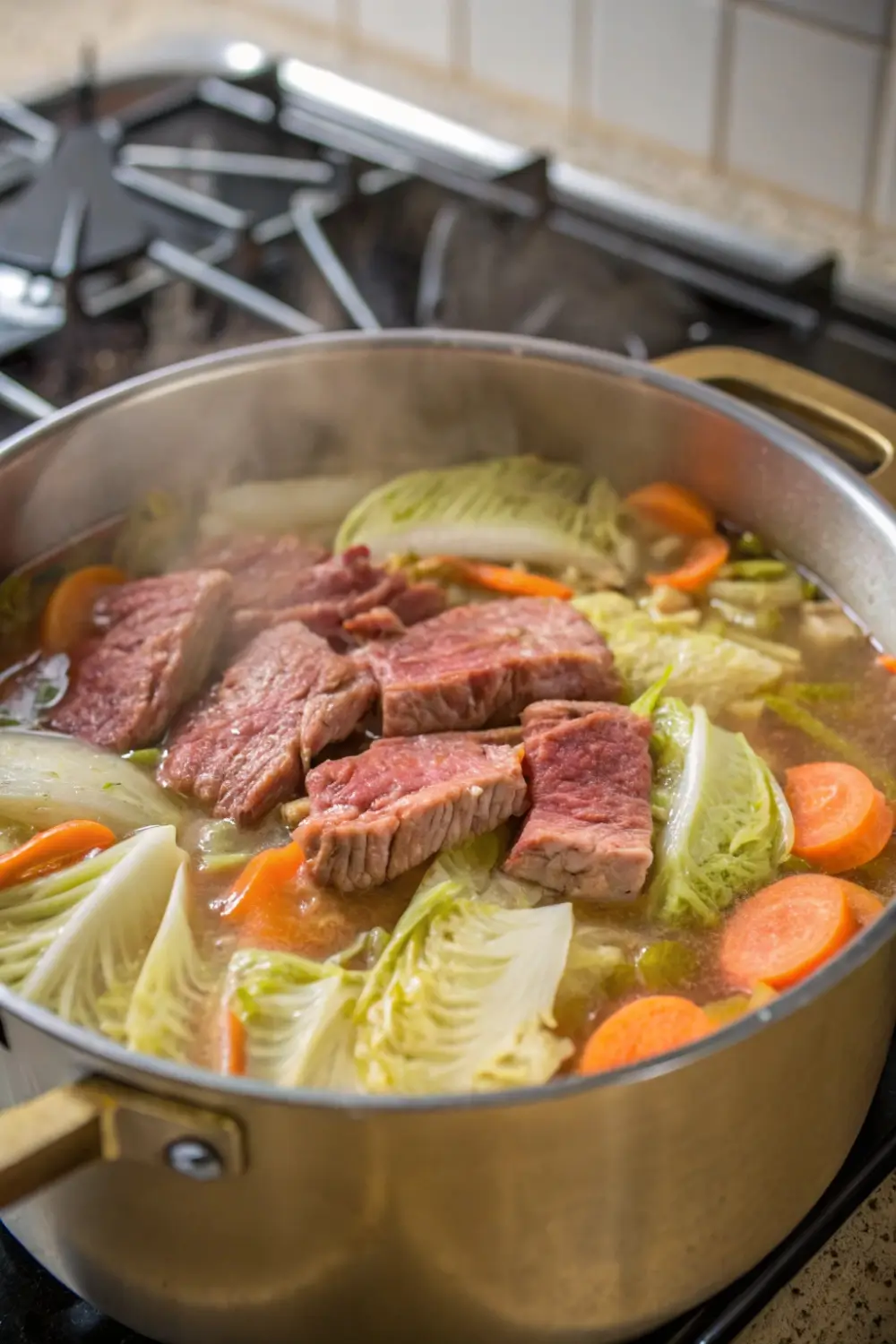
Few meals bring the same sense of warmth and nostalgia as a pot of tender corned beef simmering alongside cabbage and vegetables. This stovetop version focuses on simplicity, making it ideal for home cooks who want dependable results without complicated steps or hard-to-find ingredients.
Corned beef and cabbage is known for its deep, savory flavor and melt-in-your-mouth texture. By cooking it gently on the stovetop, you allow the spices and natural juices to infuse every bite. The result is a wholesome, balanced dish that works just as well for a cozy family dinner as it does for meal prep.
Why You’ll Love This Recipe
Easy and approachable
This recipe uses basic cooking techniques that anyone can follow. No special equipment is required—just a sturdy pot and a bit of patience.
Full of comforting flavor
The slow simmer draws out the rich seasoning of the corned beef while softening the cabbage and vegetables to perfection.
Perfect for everyday meals
Although often associated with special occasions, this dish is simple enough to enjoy anytime you want something hearty and satisfying.
One-pot convenience
Everything cooks together in one pot, which means less cleanup and more flavor.
Ingredients You’ll Need
Main ingredients
- 1 corned beef brisket (about 1.5–2 kg) with spice packet
- 1 large green cabbage, cut into wedges
- 4–5 medium potatoes, peeled and halved
- 3–4 carrots, peeled and cut into chunks
- 1 large onion, quartered
- 3 cloves garlic, smashed
Seasoning and cooking liquid
- Spice packet (included with corned beef)
- 1 teaspoon black peppercorns (optional for extra flavor)
- 2 bay leaves
- Water (enough to cover the meat)
Optional additions
- Turnips or parsnips for extra depth
- Fresh parsley for garnish
Choosing the Best Corned Beef
Flat cut vs point cut
Flat cut brisket is leaner and slices neatly, making it ideal for presentation. Point cut has more marbling, which can result in a richer flavor.
Look for quality
Choose a cut that has even thickness and a good balance of fat. Avoid overly fatty pieces, as they can make the dish greasy.
Check the seasoning packet
Most corned beef comes with a spice mix that includes mustard seeds, coriander, and bay leaves—essential for that classic taste.
Preparing Your Ingredients
Rinse the corned beef
Before cooking, rinse the brisket under cold water. This helps remove excess salt from the curing process and prevents the dish from becoming too salty.
Cut vegetables evenly
Uniform pieces ensure everything cooks at the same rate. Larger chunks are better for long simmering, as they hold their shape.
Keep cabbage wedges intact
Cutting cabbage into wedges instead of shredding helps it stay firm and flavorful during cooking.
Step-by-Step Cooking Instructions
Step 1: Start with the beef
Place the corned beef brisket into a large pot. Sprinkle in the spice packet and add bay leaves, garlic, and peppercorns.
Step 2: Add water
Pour in enough water to fully cover the meat. This ensures even cooking and prevents drying out.
Step 3: Bring to a gentle boil
Heat the pot over medium-high heat until it just begins to boil. Then immediately reduce to a low simmer.
Step 4: Simmer slowly
Cover the pot and let the beef simmer gently for about 2.5 to 3 hours. Avoid rapid boiling, as this can toughen the meat.
Step 5: Add vegetables
After the beef has cooked for about 2 hours, add potatoes, carrots, and onions. Continue simmering for 20–30 minutes.
Step 6: Add cabbage last
Place cabbage wedges into the pot and cook for another 15–20 minutes until tender but not mushy.
Step 7: Check doneness
The beef should be fork-tender and easy to slice. Vegetables should be soft but still hold their shape.
Step 8: Rest and slice
Remove the corned beef and let it rest for 10 minutes before slicing against the grain.
Tips for Perfect Results
Keep the heat low
A gentle simmer is key to tender meat. High heat can make the brisket tough.
Don’t overcook cabbage
Add cabbage near the end to keep its texture and prevent bitterness.
Slice against the grain
This shortens the muscle fibers and makes each bite more tender.
Skim excess fat
If needed, skim the surface of the broth to remove excess fat for a cleaner taste.
Serving Suggestions
Traditional plating
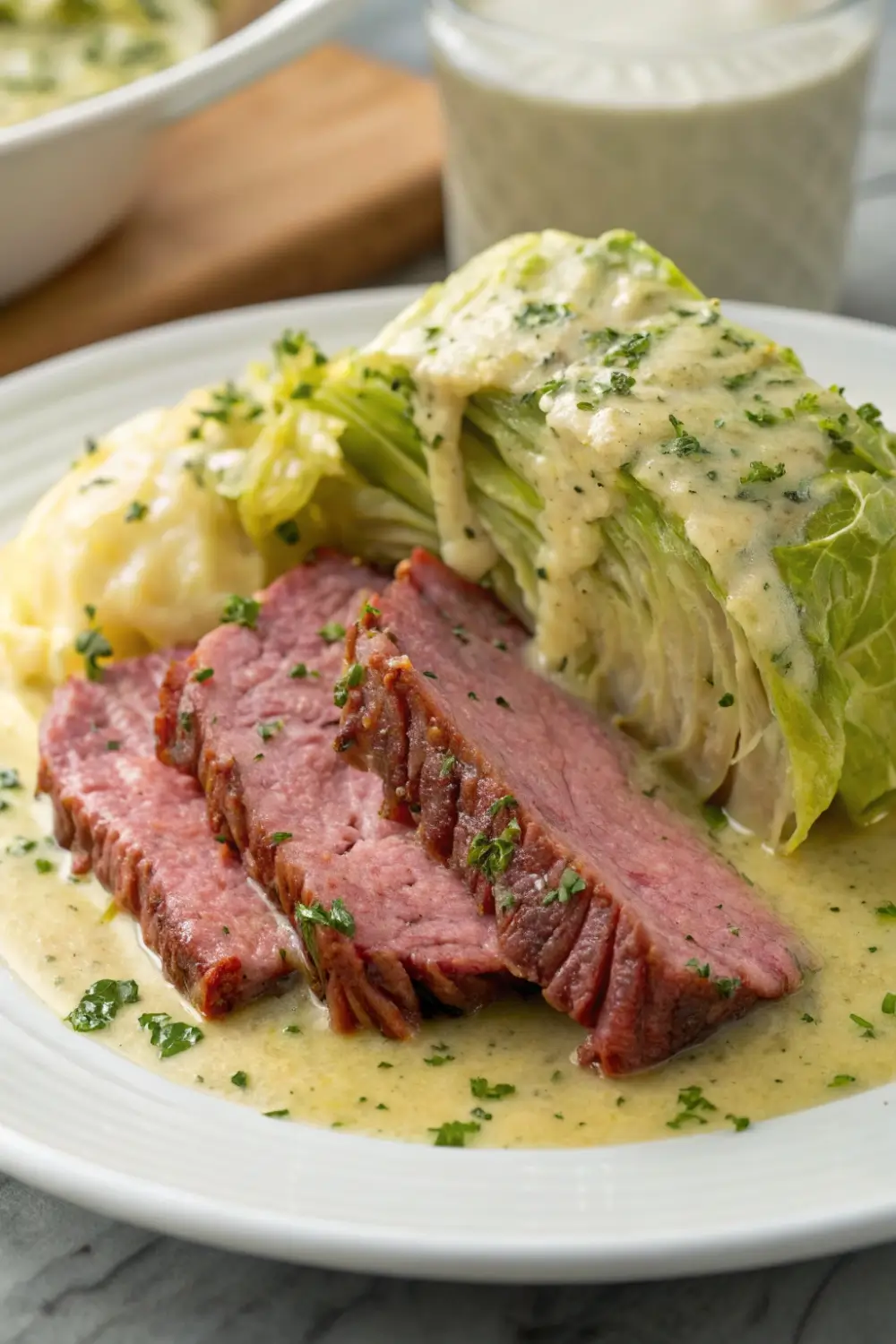
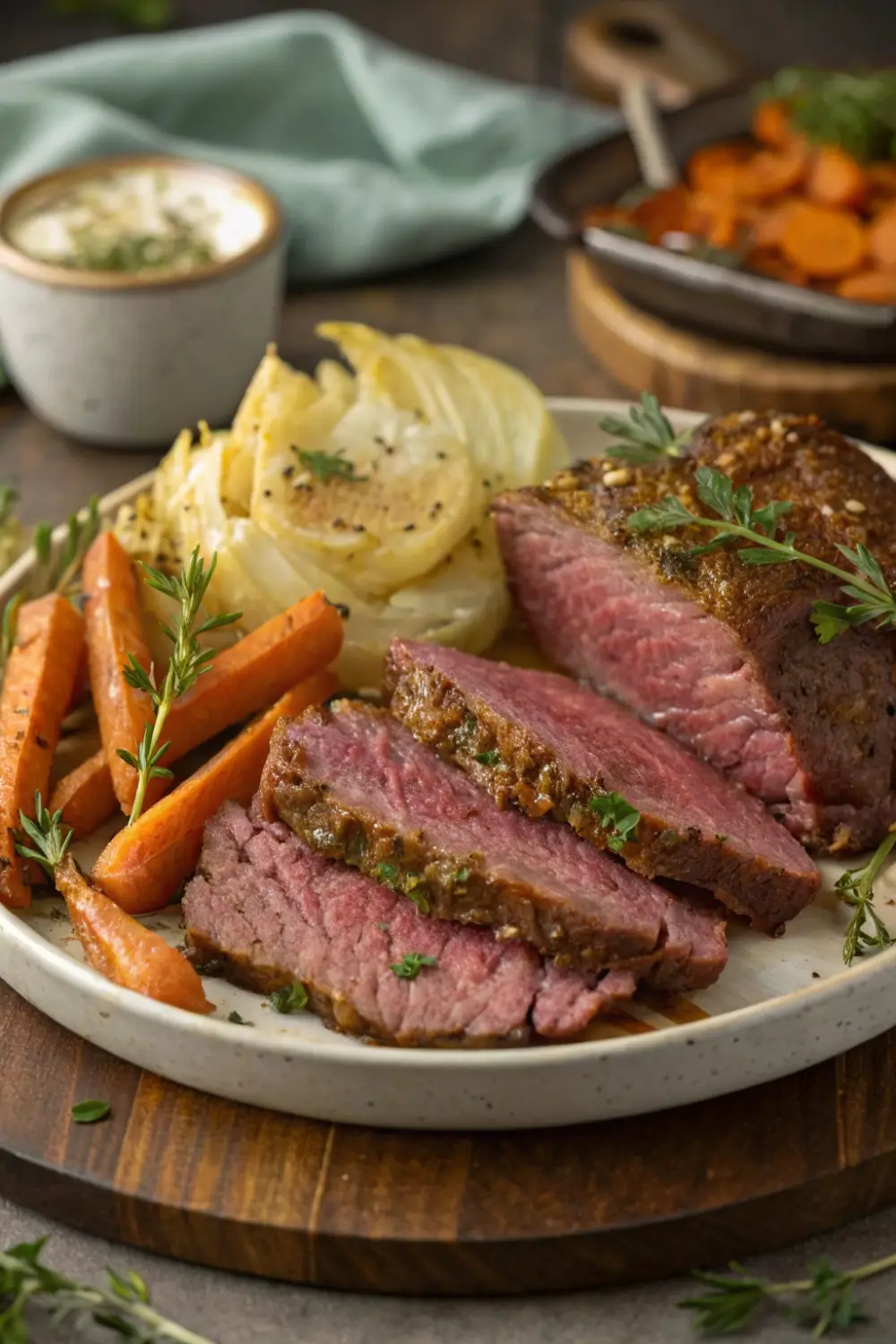
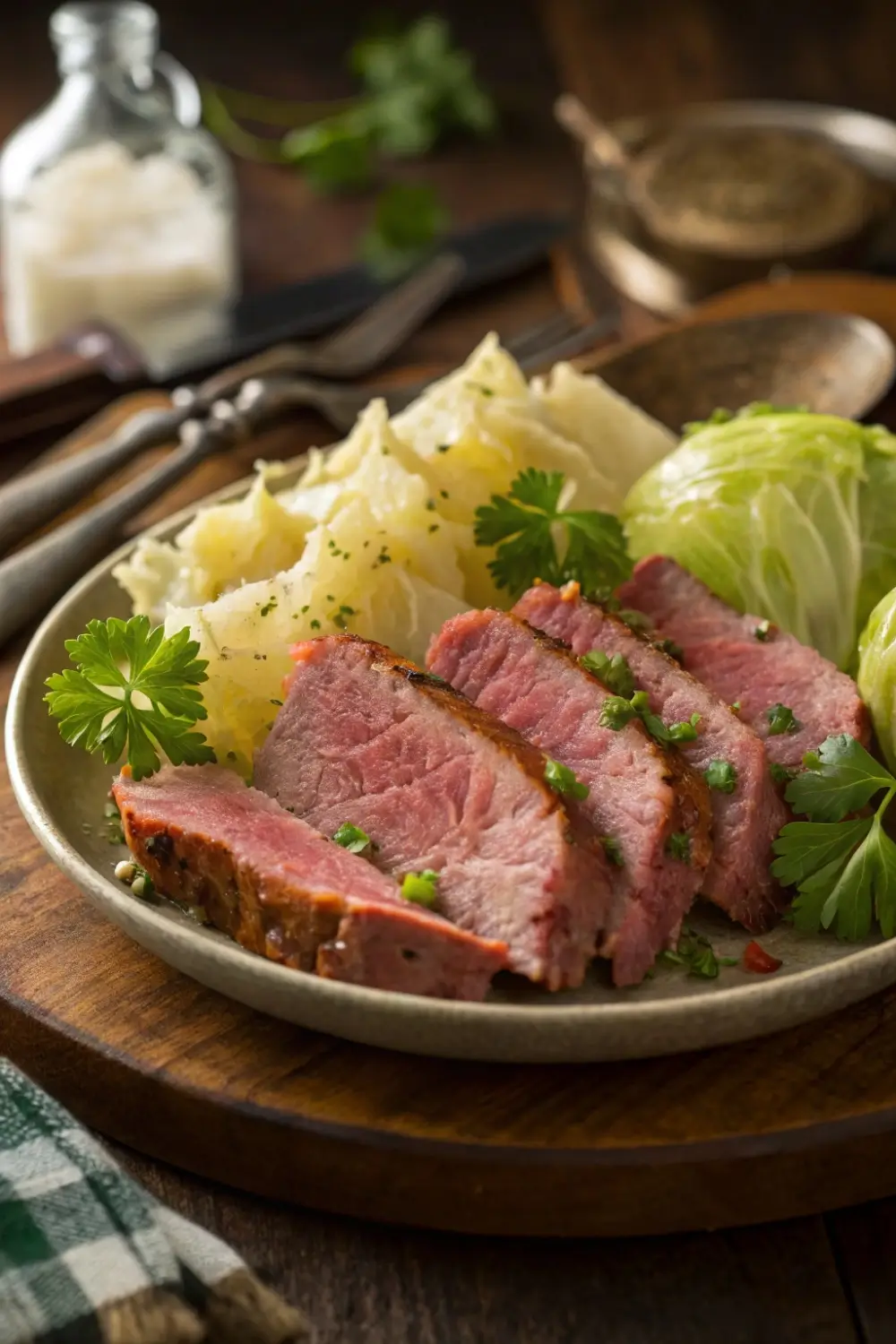
Serve slices of corned beef alongside cabbage wedges, potatoes, and carrots. Spoon some broth over the top for extra flavor.
Add a fresh touch
Sprinkle chopped parsley for color and brightness.
Pair with sides
- Crusty bread
- Steamed rice
- Simple green salad
Storage and Reheating
Refrigeration
Store leftovers in an airtight container in the refrigerator for up to 4 days.
Freezing
You can freeze sliced corned beef for up to 2 months. Wrap tightly to prevent freezer burn.
Reheating
Reheat gently on the stovetop with a bit of broth or water to keep the meat moist.
Variations to Try
Spiced version
Add extra cloves, mustard seeds, or coriander for a bolder flavor.
Garlic-forward
Increase the garlic for a deeper, aromatic profile.
Vegetable-rich
Add more root vegetables like turnips or parsnips for variety.
Nutritional Overview
This dish is rich in protein and provides a balanced combination of vegetables and carbohydrates. While corned beef can be higher in sodium, rinsing it beforehand and cooking with fresh ingredients helps balance the overall flavor.
Common Mistakes to Avoid
Cooking at too high a temperature
This can result in tough, chewy meat instead of tender slices.
Adding all vegetables at once
Different vegetables require different cooking times. Adding them in stages ensures the best texture.
Skipping the resting step
Resting the meat helps retain juices and improves slicing.
Frequently Asked Questions
What is corned beef made from?
Corned beef is typically made from beef brisket that has been cured in a seasoned salt solution. This curing process gives it its distinctive flavor and texture.
Why is my corned beef tough?
It may not have cooked long enough or was simmered at too high a temperature. Slow, gentle cooking is essential for tender results.
Can I cook this recipe faster?
This dish benefits from slow cooking. While it’s possible to speed things up slightly, reducing cooking time too much will affect tenderness.
Do I have to use the spice packet?
The spice packet provides traditional flavor, but you can customize with your own blend if preferred.
How do I reduce saltiness?
Rinse the meat thoroughly before cooking and use plenty of water during simmering.
Can I make this ahead of time?
Yes, it actually tastes even better the next day as the flavors continue to develop.
What’s the best way to slice corned beef?
Always slice against the grain to ensure tender pieces.
Can I add other vegetables?
Absolutely. Root vegetables like turnips, parsnips, or even celery work well.
Final Thoughts
This easy stovetop corned beef and cabbage recipe proves that simple cooking can deliver deeply satisfying results. With just a handful of ingredients and a steady simmer, you can create a meal that feels both hearty and comforting.
Whether you’re preparing it for a quiet dinner at home or making a large batch to enjoy throughout the week, this dish offers reliability, flavor, and warmth in every bite. Once you master the method, it becomes a go-to recipe you can return to again and again.