Contents
- 1 Why You Might Skip Sausage in Stuffing — And Still Love the Result
- 2 Foundations of Great Sausage‑Free Stuffing
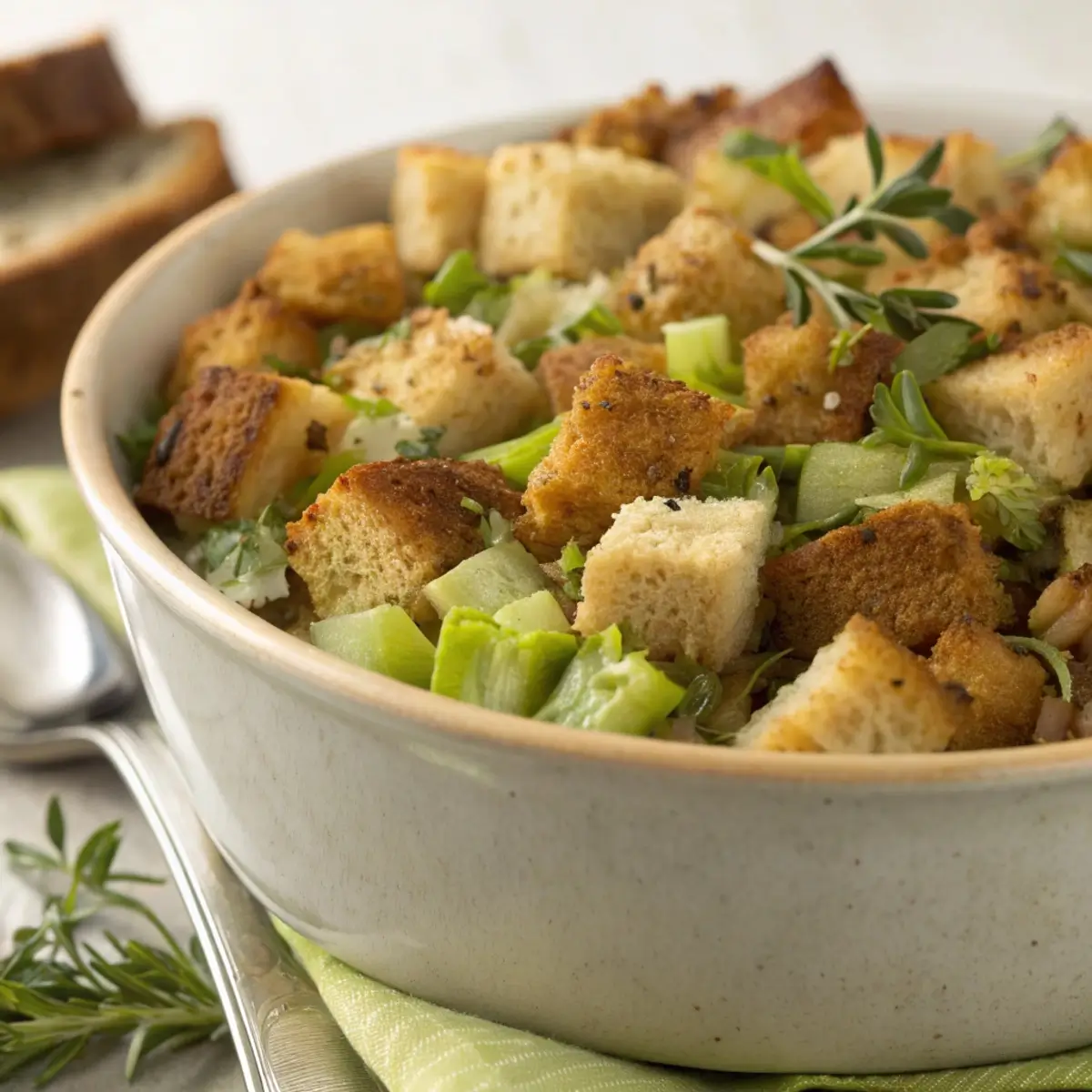
- 3 Classic Herb & Vegetable Stuffing (Sausage-Free)
- 4 Vegetarian Mushroom & Walnut Stuffing
- 5 Variations & Add-Ins for Sausage‑Free Stuffing
- 6 Make-Ahead & Storage Tips
- 7 Serving & Presentation Tips
- 8 Frequently Asked Questions
- 9 Final Thoughts
Why You Might Skip Sausage in Stuffing — And Still Love the Result
Traditional Thanksgiving stuffing or dressing often includes sausage for richness, fat, and flavor. However, there are many excellent reasons to go sausage-free (either classic or fully vegetarian):
-
Dietary preferences (vegetarian, plant‑based)
-
Health considerations (lower fat, reduced saturated fat)
-
Flavor versatility — letting herbs, vegetables, stock shine
-
Cleaner ingredient profiles for more guests
The good news is: sausage-free stuffing can still be rich, savory, and satisfying. The key lies in layering flavors, choosing good bread, and developing moisture control.
In this article, you’ll find:
-
A Classic Herb & Vegetable Stuffing (without meat)
-
A Vegetarian Mushroom & Nut Stuffing
-
Tips for textures, seasoning, moisture control
-
Make-ahead and finishing suggestions
-
Frequently asked questions
Let’s dive in.
Foundations of Great Sausage‑Free Stuffing
Before recipes, know the essential building blocks that make for an outstanding sausage-free stuffing:
-
Bread Quality & Texture
Use day-old or lightly toasted bread cubes (roughly ½ to 1 inch). Slightly stale bread absorbs liquid without turning mushy. -
Aromatic Base
Onion, celery, leeks, or shallots form the flavor backbone. Garlic, carrots, or fennel can add depth. -
Herbs & Seasoning
Sage, thyme, parsley, rosemary — fresh or dried. Nutmeg, poultry seasoning, or marjoram optionally. -
Moisture Source
Use vegetable broth, broth + melted butter (or oil), or a combination. Go slow, spoon by spoon, to avoid sogginess. -
Mix-Ins for Texture & Flavor
Nuts, mushrooms, dried fruit, apple, roasted vegetables — these make it special and hearty. -
Baking Technique
Bake in a dish or skillet, covered first, then uncovered to crisp top. Stirring mid-bake helps even cooking.
With these in mind, here are two standout recipes.
Classic Herb & Vegetable Stuffing (Sausage-Free)
This is the “go-to” stuffing that leans on herbs, vegetables, and good technique to deliver the staples of flavor without needing meat.
Ingredients (serves ~8)
-
10 cups cubed bread (day-old, white or sourdough or combination)
-
2 tablespoons butter or olive oil
-
1 large onion, diced
-
2–3 stalks celery, diced
-
2 cloves garlic, minced
-
1 carrot, diced (optional)
-
1 teaspoon dried sage
-
1 teaspoon dried thyme
-
½ teaspoon dried rosemary (crushed)
-
Salt and pepper
-
1½ to 2 cups vegetable broth (or more if needed)
-
2 tablespoons chopped fresh parsley
-
Optional: ½ cup chopped apple or dried cranberries for a touch of sweet contrast
Instructions:
-
Preheat oven to 350 °F (175 °C). Grease a 9×13 inch baking dish (or similar).
-
Toast or dry your bread cubes if they aren’t already slightly stale. That helps them absorb liquid without collapsing.
-
In a large skillet, melt butter or heat oil over medium heat. Add onion, celery, carrot (if using), and garlic. Sauté until softened, about 5–7 minutes.
-
Stir in herbs, salt, pepper — let them bloom for 30 seconds.
-
Place bread cubes in a large bowl. Add the sautéed vegetables and mix gently.
-
Begin adding broth gradually, stirring as you go until bread is moistened but not soggy. You may not need all the broth.
-
Fold in parsley and optional apple/cranberries.
-
Transfer mixture into your greased casserole dish. Cover with foil and bake 25 minutes, then remove foil and bake another 10–15 minutes to crisp the top.
-
Let rest 5–10 minutes before serving.
Tips:
-
If your stuffing seems dry halfway through, drizzle a bit more warm broth.
-
Stir gently to avoid crushing cubes, which leads to mush.
Vegetarian Mushroom & Walnut Stuffing
This version embraces earthiness with mushrooms and texture from walnuts — hearty and satisfying.
Ingredients (serves ~8)
-
10 cups cubed bread (preferably a sturdy loaf)
-
2 tablespoons butter or olive oil
-
1 large onion, diced
-
2–3 stalks celery, diced
-
8 oz mushrooms, sliced (cremini, button, or mixed)
-
½ cup chopped walnuts or pecans
-
2 cloves garlic, minced
-
1 teaspoon dried thyme
-
1 teaspoon dried sage
-
Salt and pepper
-
1½ to 2 cups vegetable broth
-
2 tablespoons fresh parsley
-
Optional: ¼ cup dried cranberries or raisins
Instructions:
-
Preheat oven to 350 °F (175 °C). Grease a baking dish.
-
Toast or dry your bread cubes if needed.
-
In a skillet, heat butter or oil, sauté onion, celery, and garlic until translucent.
-
Add mushrooms and cook until they release moisture and begin to brown.
-
Stir in walnuts, thyme, sage, salt, and pepper. Cook for a minute to release aromas.
-
Combine bread cubes and sautéed mixture in a large bowl.
-
Add broth slowly until moisturizing the bread without saturating it fully.
-
Fold in parsley and optional dried fruit.
-
Transfer to dish, cover, bake 25 minutes; uncover, bake additional 10–15 minutes until top is crisp.
-
Rest before serving.
This version adds richness and complexity even without meat.
Variations & Add-Ins for Sausage‑Free Stuffing
You can play with combinations and add-ins to keep your stuffing new each year:
-
Roasted Squash or Sweet Potato cubes
-
Grated or chopped root vegetables (parsnip, turnip)
-
Leeks instead of or along with onion
-
Herb mixes: rosemary, marjoram, tarragon
-
Seeds: pumpkin seeds, sunflower seeds for crunch
-
Cheese: a little shredded cheese (Parmesan, mild cheddar) added late
-
Fresh citrus zest or apples for brightness
-
Coconut milk or half-and-half as part of moisture liquid for a richer texture
Just maintain balance — don’t overload or make it mushy.
Make-Ahead & Storage Tips
-
You can assemble stuffing the day before. Store covered in the baking dish in the fridge. Before baking, let it sit at room temperature 20–30 minutes.
-
Freeze portions: assemble and freeze in airtight containers. Thaw in fridge overnight, then bake as usual, possibly adding a bit extra broth.
-
If mixing too far ahead causes sogginess, allow bread cubes to sit separate, then combine vegetables just before baking.
Serving & Presentation Tips
-
Bake in a decorative dish or cast‑iron skillet for rustic charm.
-
Garnish with fresh parsley or thyme sprigs before serving.
-
Add a few golden-brown crouton pieces on top for texture contrast.
-
Serve stuffing alongside turkey, gravy, roasted vegetables, and cranberry sauce for a complete plate.
Frequently Asked Questions
Does stuffing need to be cooked inside the turkey?
No — cooking stuffing separately as above is safer and more manageable. Internal stuffing can dry or risk undercooking.
Can I make stuffing gluten-free?
Yes. Use gluten‑free bread cubes and gluten‑free broth. Herbs and vegetables remain the same.
Is it necessary to toast the bread first?
It’s highly recommended. Slightly dry or stale bread absorbs better without turning mushy.
How to prevent stuffing from being dry or soggy?
Add broth gradually, test for moistness. Don’t oversaturate. Bake covered initially to retain moisture, then uncover to crisp top.
Can I serve stuffing cold or room temperature?
It’s best warm, but it can be made ahead and reheated in the oven with a little broth or butter to freshen.
Final Thoughts
You absolutely don’t need sausage to have a beautifully flavored, comforting, and satisfying stuffing. With quality bread, savory aromatics, herbs, and smart layering, you can deliver stuffing that delights vegetarians and meat lovers alike. Use these sausage‑free recipes, variations, and tips to build a stuffing you’ll be proud to serve — rich in flavor, texture, and heart.